
Elliptical vs Stepper: Which Cardio Machine Is Best for Your Home Workout?
Both elliptical trainers and steppers get you moving, raise your heart rate and support cardiovascular fitness, but they do it in genuinely different ways and they suit different types of people for different reasons. Choosing between them based on which looks more impressive or which was cheaper tends to produce a machine that collects dust within three months. Choosing based on which movement you can sustain comfortably, which fits your space and which matches your training goals produces a machine you will actually use.
This guide covers the real differences between the two, who each one suits and what to check before buying either.
How Each Machine Moves and Why It Matters
The most important difference between an elliptical and a stepper is the movement pattern, because the pattern determines which muscles are working, how much impact reaches your joints and whether you can sustain the session comfortably.
An elliptical trainer produces a smooth, continuous gliding stride where both feet stay in contact with the pedals throughout the movement. Most ellipticals also include moving handlebars that pull and push in coordination with your stride, which adds an upper body component and distributes the work across more muscle groups simultaneously. The key characteristic of this movement is that it is low impact. Because the feet never leave the pedals, there is no point in the stride where your bodyweight lands with force, which is what distinguishes it from running or even walking on a treadmill.
A stepper simulates the action of climbing stairs. The movement is more vertical, driving through the quads, hamstrings and glutes with each step, and the intensity can be varied by how fast you step and how much resistance you apply. A HIIT stepper in particular is designed to support short, high-effort intervals that spike heart rate quickly rather than sustained low-to-moderate cardio at a steady pace.
Neither is inherently superior. They target fitness in different ways and suit different preferences, and understanding that is the starting point for choosing correctly.
What an Elliptical Does Well
An elliptical trainer is well suited to sustained cardiovascular sessions at a moderate to high intensity. The gliding movement is low impact enough to be comfortable for extended periods, which makes ellipticals a popular choice for people who want to accumulate significant cardio volume without the joint stress that running generates over time.
The dual-action design of most ellipticals, with both lower and upper body involvement, means a well-paced session on a quality elliptical trainer trains the cardiovascular system efficiently while working the legs, glutes, core and upper body simultaneously. This is a meaningful advantage for people with limited training time who want each session to cover as much of the body as possible.
Ellipticals also tend to be easier to maintain steady conversation on or to combine with audiobooks and podcasts, since the movement is rhythmic and predictable once the stride is established. This is not a trivial point for home use, where the ability to actually enjoy a session determines whether you keep doing it.
What a Stepper Does Well
A stepper, and particularly a HIIT-oriented stepper, is built for intensity. The stair-climbing movement loads the glutes and quads under a more demanding pattern than an elliptical stride, and the vertical emphasis of the step means the movement challenges balance and core stability alongside the cardiovascular system in a way that elliptical training does not.
HIIT steppers are particularly effective for interval training because they allow you to vary effort sharply between hard working periods and recovery steps, which is harder to do cleanly on an elliptical. If your preferred training style involves short bursts of very high effort rather than sustained moderate-intensity cardio, a HIIT stepper suits that approach more naturally.
Steppers also tend to have a smaller footprint than ellipticals because the movement is more compact and vertical. This is a real practical advantage in a smaller home where floor space for cardio equipment is limited.
Space and Storage Considerations
For home use, the difference in footprint between an elliptical and a stepper matters more than it might seem on a product page, because the footprint number is the machine's static dimensions, not the space you actually need to use it safely and comfortably.
An elliptical trainer typically requires additional clearance at the rear of the machine for the pedal arc, and at the sides for the handlebar swing. Some ellipticals fold to reduce their stored footprint, which is worth considering if the machine needs to share space with other uses. The NordicTrack Space Saver SE9i is designed specifically with this in mind, folding up when not in use to reduce the floor presence significantly.
A stepper has a naturally smaller footprint because the movement is contained within the machine's standing area, and most steppers do not require the same side or rear clearance that an elliptical does. If your available floor space is genuinely limited, this difference is often enough to settle the decision on its own.
For either machine, also account for ceiling height during use, particularly on a stepper where the step height adds to your standing height at the top of the movement.
Aerobic Steps and Deck Platforms
An aerobic deck step is a different category again. It is not a powered machine with a motor or resistance system but a height-adjustable platform used for step aerobics routines, box step variations, incline push-ups and selected conditioning movements. It is the most space-efficient option of the three, stores flat when not in use and is suitable for home settings, group fitness classes and studio programming.
The trade-off compared to either an elliptical or a powered stepper is that the intensity and pacing of the session is entirely self-directed. A deck step does not set resistance, pace or incline, so the workout quality depends on how it is programmed rather than on machine settings. For users who enjoy guided or app-based workouts and prefer the machine to set the challenge, an elliptical or powered stepper will suit better. For users who prefer to self-direct their conditioning work or who want a portable, low-maintenance piece of equipment that supplements an existing training setup, a quality aerobic step is difficult to beat on value.
Which Machine Suits Which Training Goal
For sustained low-to-moderate intensity cardio accumulated over longer sessions, an elliptical trainer is generally the more comfortable and practical choice. The gliding motion is easier to sustain for 30 to 60 minutes at a moderate effort than stair-climbing, and the dual-action design adds training value per unit of time.
For shorter, higher-intensity sessions built around intervals and lower-body loading, a HIIT stepper suits the movement pattern and intensity structure better. The step is more demanding per minute at high effort, which means you can achieve a meaningful cardiovascular session in less total time.
For someone who already has strength training covered and wants to add a simple, space-efficient conditioning tool to a home gym, an aerobic deck step gives broad functionality without the floor space commitment or cost of a powered machine.
And for people managing joint concerns or returning from injury, the elliptical's low-impact movement is generally the most forgiving starting point, though individual suitability should always be discussed with a physiotherapist or doctor before starting a new program.
What to Check Before Buying a Cardio Machine on Sale
A sale price on cardio equipment is a good opportunity, but the discount percentage alone does not tell you whether the machine represents value for your specific situation. Before buying, check the current product listing for the exact dimensions (not just the footprint but the moving part clearance), the motor rating and warranty for powered machines, the weight capacity, what delivery and installation options are available, and whether any included programs or app subscriptions require ongoing costs after purchase.
For ellipticals in particular, check the stride length, since a stride that is too short or too long for your height will feel awkward and discourage use. Most manufacturers publish recommended height ranges for their machines, and this specification is worth checking against your own height before committing.
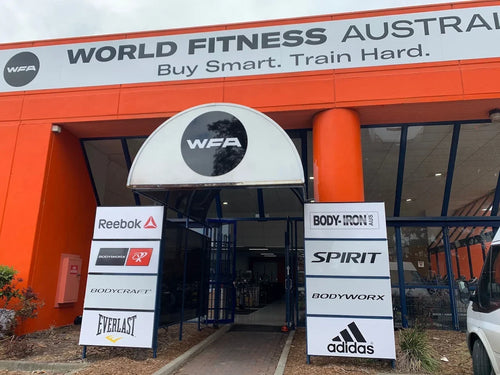
World Fitness Australia's Cheltenham showroom carries cardio equipment that can be tested in person, which is particularly valuable for ellipticals where stride feel is difficult to judge from a specification sheet alone. Showroom pickup also offers savings of up to 10% compared to home delivery on eligible products.
Frequently Asked Questions
What is the difference between an elliptical trainer and a stepper?
An elliptical uses a smooth gliding stride, often with moving handlebars, while a stepper simulates a stair-climbing movement with a more vertical emphasis. The better choice depends on your preferred movement pattern, training goals and available space rather than one being universally superior.
Is an elliptical trainer good for home cardio workouts?
An elliptical can support sustained low-to-moderate intensity cardiovascular sessions with a gliding movement that suits extended training periods. Consider its footprint, stride length relative to your height, resistance options and storage options when comparing models for home use.
What is a HIIT stepper used for?
A HIIT stepper simulates stair climbing and is designed for interval workouts that drive heart rate up quickly through short hard efforts, challenging the lower body and cardiovascular system in a compact, high-intensity format.
Is an elliptical trainer low impact?
The gliding motion keeps the feet in contact with the pedals throughout the stride, which removes the landing impact that running generates and makes elliptical training generally easier on the joints than treadmill running. Individual suitability varies, particularly for people managing an injury or joint condition, and medical advice should be sought before starting any new training program.
How do you choose cardio equipment for a small home?
Measure your available floor space and compare machine dimensions including the clearance needed for the movement range, not just the static footprint. Also consider whether the machine folds for storage, how it will be accessed and positioned day to day, and which type of workout you will consistently follow through on rather than which looks most impressive in the space.
What is an aerobic deck step used for?
An aerobic deck step is a height-adjustable platform used for step aerobics routines, conditioning circuits, box step variations, incline push-ups and bodyweight movements. It is compact, stores flat and suits home use, studio classes and supplementary conditioning work alongside a main training setup.
Should you choose an elliptical or a stepper for weight loss?
Both can support the calorie expenditure that contributes to weight management. Results depend primarily on workout intensity, consistency over time and overall nutrition rather than which machine you choose. The more important question is which machine you will use regularly and enjoy enough to keep doing, since the best cardio machine is the one you will actually train on.
What should you check before buying a cardio machine on sale?
Review the current price, exact dimensions and movement clearance requirements, stride length for ellipticals, motor rating and warranty for powered machines, weight capacity, delivery or pickup options and whether any app or program features have ongoing subscription costs after purchase.
Cheltenham VIC ☎ Real questions, real people
(03) 9583 7820 Contact our team →
Leave a comment