
Home Gyms With Leg Press: Why This Feature Matters and Which Models Have It
A leg press station matters on a home gym because it trains the quadriceps, hamstrings and glutes through a guided, supported path, which means heavy lower body work without a spotter and without the balance demands of a free barbell squat.
Not every multi station gym includes one, so knowing what to look for and which models actually have it saves buying the wrong unit and finding out later.
Why a Leg Press Station Matters at Home
Trains the Whole Lower Body From One Position
A single leg press station engages the quadriceps, hamstrings and glutes together in one pressing motion, with the calves working as stabilisers throughout. That makes it one of the more efficient lower body exercises available on a home multi station gym, since it covers several major muscle groups without changing attachments or stations.
Removes the Need for a Spotter
A barbell back squat carries real risk when training alone, since a failed rep with no spotter can be genuinely dangerous. A leg press station is fixed to a guided track, so the weight cannot fall on you the way a barbell can, which makes it one of the safer ways to train close to muscular failure without another person in the room.
Reduces Load on the Lower Back
Because the leg press supports your back against a pad throughout the movement, it places far less compressive load on the spine than a standing barbell squat does. This is a large part of why leg press stations are popular for older lifters, anyone managing a back issue, or beginners still building core strength to support heavier free weight training later.

How Foot Placement Changes What You Train
Where you place your feet on the platform shifts which muscles do most of the work. A higher, wider foot position emphasises the glutes and hamstrings, while a lower, narrower position shifts more of the load onto the quadriceps. Most home gym leg press stations have a footplate wide enough to experiment with a few positions, so you do not need separate equipment to target different parts of the lower body.
Types of Leg Press Setups for Home Gyms
Leg Press Built Into a Multi Station Gym
This is the most common setup for home use. The leg press shares the frame and weight stack with the gym's other stations, which keeps the total footprint down but means the leg press seat and track are fixed rather than adjustable to a separate configuration.
Standalone Plate Loaded Leg Press
A dedicated leg press machine loaded with weight plates rather than a stack offers higher maximum resistance and is built specifically around the leg press movement, which suits committed lower body training but takes up more floor space as a separate unit.
Vertical Leg Press
A vertical leg press has you lying flat and pressing the platform directly upward rather than at an angle. This orientation reduces lower back stress further and generally has the smallest footprint of the three setups, which makes it a reasonable option where floor space is genuinely tight.
What Is a Gym Station, and How Many Do You Need
A gym station is a single exercise position on a multi station frame, such as a chest press, lat pulldown or leg press. Two to three stations cover most home training needs on their own, while four to five stations add more variety, typically including a cable crossover alongside the core pressing and pulling movements.
More stations generally means a larger footprint, so it is worth matching station count to how many exercises you actually plan to use rather than maximising variety for its own sake.
Which Models Include a Leg Press
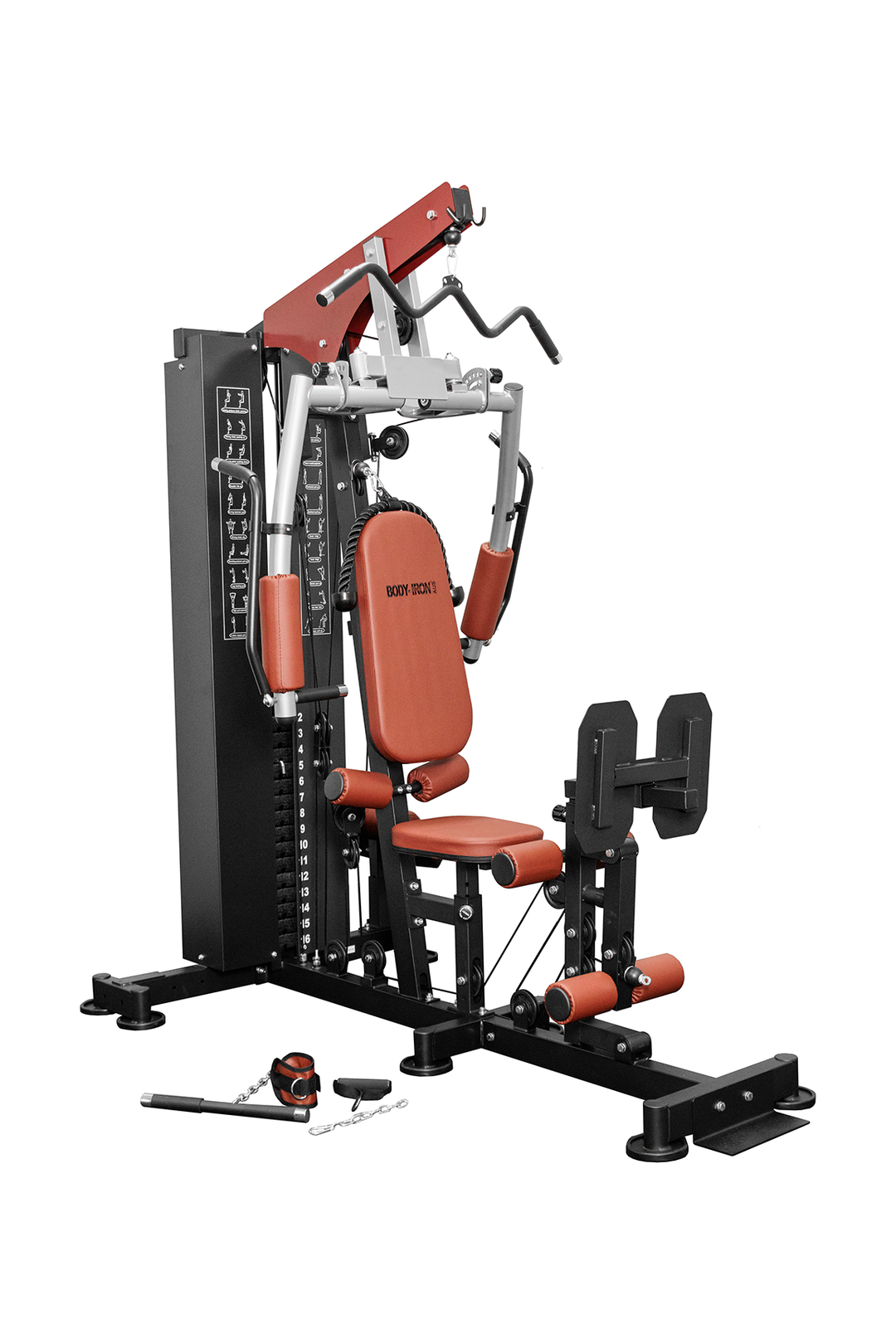
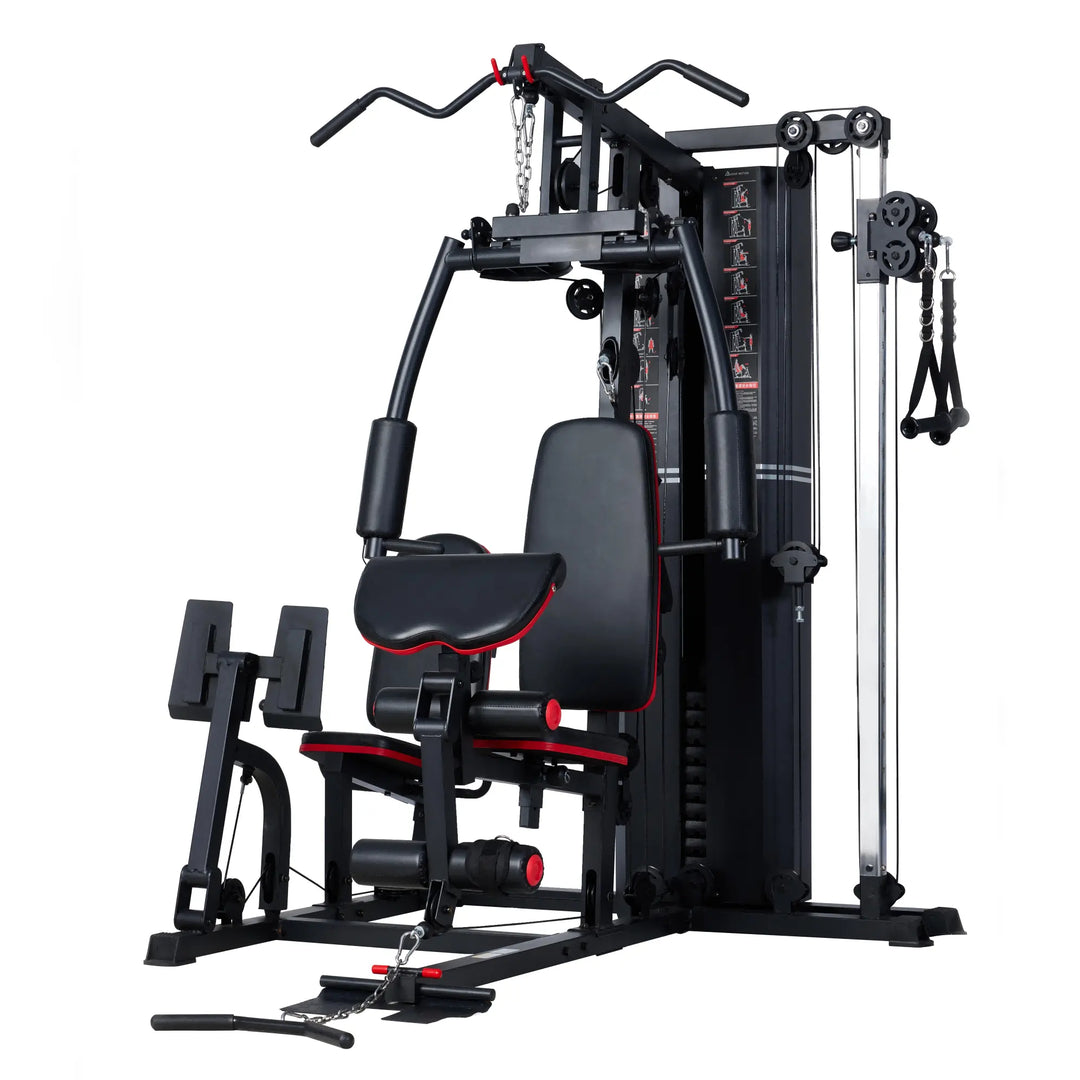
Leg press is not included on every multi station gym, so it needs to be checked model by model rather than assumed. Among World Fitness Australia's range, the Body Iron Studio S250 and the Body Iron BHG8000 both include a built-in leg press station alongside chest press, lat pulldown and cable crossover. The Body Iron BHG7000 is also built with a leg press station included as part of its frame.
Safety Tips for Using a Leg Press at Home
-
Do not lock out your knees at full extension. Set the seat position so your knees stay slightly bent at the top of the movement to keep the load on the muscles rather than the joint.
-
Keep your lower back flat against the pad. If your lower back lifts off the pad, the weight is too heavy or the range of motion is too deep for your current mobility.
-
Increase weight gradually. Test a new station at a light weight first rather than loading up on the first session, since the platform angle and seat position take some getting used to.
Common Mistakes When Choosing a Leg Press Setup
-
Assuming every multi station gym has one. Leg press is a specific included feature, not a default on every model, so it needs to be confirmed before buying.
-
Ignoring foot plate size. A narrow footplate limits how much you can vary foot placement, which reduces the exercise's versatility over time.
-
Overlooking rated load. Home leg press stations are generally rated lower than dedicated commercial machines, so check the figure against your training goals rather than assuming it matches a gym you have used elsewhere.
Where to Start Shopping
This is the only section carrying product and collection links, kept in one place rather than scattered through the article.
|
If you want |
Start with |
|---|---|
|
A compact multi station gym with leg press included |
|
|
More stations plus a leg press and cable station |
|
|
Comparing every multi station option with leg press |
|
|
Browsing the full home gym range |
Models With a Built-In Leg Press Station
Confirmed leg press included, from compact to full 5-station.

Frequently Asked Questions
Q. Why is a leg press station important in a home gym?
A. A built-in leg press station lets you train quadriceps, hamstrings and glutes safely without free weights, which is useful for anyone training alone at home without a spotter.
Q. Can I add a leg press to a home gym later, or does it need to be built in?
A. On most multi-station frames the leg press is part of the main frame and cannot be added afterward, so it needs to be chosen at purchase if it is a requirement.
Q. What muscles does a home gym leg press station work?
A. A leg press station primarily trains the quadriceps, hamstrings and glutes, with the calves engaged secondarily depending on foot placement on the platform.
Q. How much weight does a home gym leg press station typically support?
A. Leg press stations on home multi-gyms are generally rated to a lower maximum load than dedicated commercial leg press machines, so the figure should be checked per model against your target training weight.
Q. What is a gym station and how many should a home gym have?
A. A gym station is a single exercise position on a multi-station frame, such as a chest press or lat pulldown; two to three stations covers most home training needs, while four to five adds more variety.
Q. Do all multi-station gyms include a leg press by default?
A. No, leg press is included on some multi-station models and not others, so it needs to be checked against the specific model rather than assumed.
Q. Is a home gym leg press safer than a standalone leg press machine?
A. A home gym leg press station is generally as safe as a standalone unit when used with correct seat position and controlled range of motion, since both use a guided, fixed movement path.
Q. What is the safest way to use a leg press station at home?
A. Set the seat so your knees do not lock out at full extension, keep your lower back flat against the pad, and increase weight gradually rather than testing a heavy load on the first session alone.
Checkout more on Home Gym collection

Leave a comment