
Walking Pads vs Treadmills: What's the Difference?
Buy Smart, Train Hard: a walking pad is a slimline, motor-only deck built for walking at lower speeds in a compact footprint, while a full treadmill includes handrails, a console and incline, and supports running as well as walking, so the right one depends on whether you want to move a little all day or train properly in a session.
Search for a treadmill for under the desk and you will run into a product that barely existed a few years ago: the walking pad. Searches for a walking machine or a walk machine often mean the same thing, a low, quiet belt you can step onto while working, watching TV or taking calls. It is a genuinely different product from the full-size machines in our treadmill range, and choosing the wrong one is the most common regret in this category. This guide explains the difference, how to set up and use a walking pad properly, how fast to walk, and when a full treadmill is the better buy.
What Is a Walking Pad?
A walking pad is a slimline, motor-only deck built for walking at lower speeds in a compact footprint. It has no fixed handrails and usually no tall console, so the whole machine is low and flat, which is why it slides under a standing desk, a bed or a sofa. Many people call it a walking machine or a walk machine, and the idea is the same: easy, steady movement rather than a structured cardio workout. Our York Fitness Walking Pad Treadmill is the entry point to the range at $599.
Walking Pad vs Treadmill at a Glance
| Factor | Walking Pad | Full Treadmill (example: Sole F63) |
|---|---|---|
| Designed for | Walking at lower speeds, often while working | Walking, jogging and running workouts |
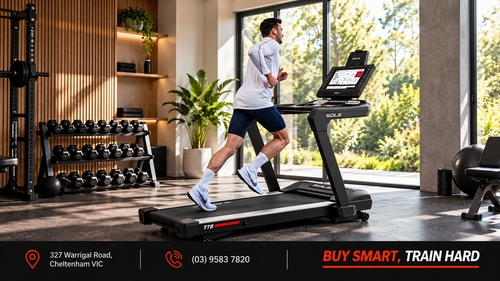
| Handrails and console | Typically none or minimal | Handrails and a full console, with a 6.5" display on the F63 |
| Top speed | Walking-focused, lower top speed | Up to 20km/h on the F63 |
| Incline | Usually flat | 15 incline levels on the F63 |
| Running deck | Compact, shorter | 51 x 152cm on the F63 |
| Footprint and storage | Slim and low, slides under furniture | Larger; the F63 folds upright, 195 x 89 x 170cm |
| Starting price | From $599 (York Walking Pad) | From around $1,099, up to $2,499 for the F63 |
Treadmill for Under the Desk: Can a Walking Pad Be Used Under a Standing Desk?
Yes. A walking pad's slim, low-profile deck is specifically designed to fit under a standing desk, letting you walk at a low speed while working. A full treadmill with fixed handrails and a tall console will not tuck under a desk in the same way, which is the main reason walking pads exist. If working while walking is your goal, a walking pad is the right product category.
How to Set Up a Walking Pad Under Your Desk
- Check desk height first. Set your standing desk so your forearms are roughly level with the keyboard when you stand on the belt. You may need it a little higher than your normal standing height once you add the deck.
- Measure the clearance. Confirm the deck's height and length fit under the desk and leave room behind you so you can step off safely.
- Choose a flat, hard surface. Use a level floor and, if you have timber or tiles, a mat underneath to reduce vibration and noise.
- Position your screen. Raise the monitor to eye level so you are not looking down, which makes walking and typing more comfortable.
- Keep cables clear. Route power and desk cables away from the belt so nothing catches while you walk.
- Start slowly. Begin at a very low speed and build up once typing and mouse work feel natural.
How Fast Should You Walk While Working?
Most people find a slow, steady pace works best for desk work. As a general guide, around 2 to 3 km/h is comfortable for typing, calls and reading for many users, while faster speeds suit walking when you are not concentrating on detailed work. Everyone is different, so treat these as starting points and adjust to what feels natural. If your typing accuracy drops or your posture suffers, slow the belt down.
| Week | Suggested Routine | Goal |
|---|---|---|
| Week 1 | 10 to 15 minutes at a slow pace, once or twice a day | Get used to the belt and balance |
| Week 2 | 15 to 20 minutes, two or three times a day | Make walking part of the work routine |
| Week 3 | 20 to 30 minutes in blocks, mixing calls and reading | Build consistency |
| Week 4 onward | Longer blocks as comfortable, with sit and stand breaks | Sustainable daily movement |
General guide only, not medical advice. Anyone with a health condition, balance issues or returning from injury should check with a health professional before starting.
Can You Run on a Walking Pad?
Walking pads are generally built for walking speeds rather than running, with a smaller motor and shorter deck than a full treadmill designed for higher-impact use. A shorter deck leaves little room for a running stride, and a lighter motor and frame are not designed for the repeated impact of running. If you want to jog or run, choose a full treadmill with a stronger motor, longer deck and handrails.
Does a Walking Pad Have Incline?
Most walking pads are flat with no incline function, unlike full treadmills which often include adjustable incline settings. If hill-style walking or a tougher workout is important, a full treadmill is the better fit. For example, the Sole F63 offers 15 incline levels, which lets you progress from easy walking to proper hill sessions.
Is a Walking Pad Quieter Than a Treadmill?
Walking pads are generally quieter than full treadmills, since they run at lower speeds with a smaller motor, making them more suitable for office or shared living environments. To keep noise down further, use a mat under the deck, keep the belt clean and lubricated as the manufacturer recommends, and avoid running the machine at the top of its speed range.
Do Walking Pads Fold for Storage?
Many walking pads are already slim and lightweight by design, with some models also folding or standing upright for further space saving. Because they are so low, they often store flat under a bed or behind a sofa without folding at all. Full treadmills take more room, although folding models such as the Sole F63 store upright with transport wheels to move them.
Choose a Walking Pad If...
- You want to move while you work. Walking during calls and desk time is exactly what a walking pad is built for.
- Space is tight. Its low, slim shape fits under a desk or furniture.
- You are starting from low activity. Easy, steady walking is a gentle way to build a daily habit.
- You share a space. Lower speeds and a smaller motor mean less noise.
- You are on a smaller budget. A walking pad is the most affordable way into the category.
Choose a Full Treadmill If...
- You want to jog or run. You need a longer deck, a stronger motor and handrails for safety.
- You want structured cardio. Console programs, speed range and incline support proper training sessions.
- You want incline or hill training. Full treadmills offer adjustable incline that walking pads usually lack.
- Several people will use it. Full-size frames cope with a wider range of users and weights.
- You have a dedicated space. If you can give it room, a full treadmill does more.
Is a Walking Pad Worth It If I Already Have a Treadmill?
A walking pad suits light daily movement, such as walking during work calls, while a full treadmill remains better suited to structured cardio or running sessions, so the two can complement rather than replace each other. Many people keep a full treadmill for training days and use a walking pad at the desk, which spreads movement across the whole day instead of one session.
What Is a Realistic Walking Pad Budget?
Walking pads generally sit at the more affordable end of the treadmill range, with pricing reflecting motor size, deck quality and any console features included. In our range, the York Fitness Walking Pad Treadmill is $599, while full-size treadmills start from around $1,099. Stepping up to a full machine adds handrails, a bigger motor, a console and the option to run, which is what the extra spend buys. See every option in the treadmill collection.
What to Look for in a Walking Machine
- Deck length for your stride. A longer deck feels safer and more natural, especially for taller users.
- Maximum user weight. Check the rating against the heaviest person who will use it.
- Noise level. Important in apartments, offices and shared homes.
- Speed range. Make sure the slow end is gentle enough for desk work.
- Controls. A remote or simple display makes adjusting speed easy mid-task.
- Storage. Confirm whether it slides under furniture or folds if space matters.
Common Mistakes With Walking Pads
- Starting too fast. Typing and balance take a few sessions to settle, so begin slowly.
- Buying one to run on. Walking pads are not designed for running, so choose a full treadmill if that is the goal.
- Setting the desk too low. Your forearms should sit comfortably level with the keyboard while standing on the belt.
- Skipping a mat. A mat reduces vibration and noise, especially on hard floors.
- Expecting a full workout. A walking pad is for steady movement, not intense cardio.
See Them in Person
Our Cheltenham showroom in Melbourne, at 327 Warrigal Road, displays a range of treadmills so you can compare a walking pad with full-size machines side by side. Treadmills are also shipped Australia wide. Call our team on 03 9583 7820 for current pricing and help choosing between a walking pad and a full treadmill.
Buy Smart, Train Hard
Move a little all day with a walking pad, or train properly with a full treadmill, or do both. Browse the full treadmill collection, visit our Cheltenham showroom, or call our team on 03 9583 7820 for a straight recommendation. Buy smart, train hard.
Cheltenham VIC ☎ Real questions, real people
(03) 9583 7820 Contact our team →
Frequently Asked Questions
Q. What is the difference between a treadmill and a walking pad?
A. A walking pad is a slimline, motor-only deck built for walking at lower speeds in a compact footprint, while a full treadmill includes handrails, a console and incline, and supports running as well as walking. Visit our Cheltenham showroom to see both side by side.
Q. Can a walking pad be used under a standing desk?
A. Yes, a walking pad's slim, low-profile deck is specifically designed to fit under a standing desk, letting you walk at a low speed while working.
Q. Can you run on a walking pad?
A. Walking pads are generally built for walking speeds rather than running, with a smaller motor and shorter deck than a full treadmill designed for higher-impact use. If you want to run, contact our team and we can recommend a full treadmill.
Q. Does a walking pad have incline?
A. Most walking pads are flat with no incline function, unlike full treadmills which often include adjustable incline settings. Contact our team to confirm the features of any specific model.
Q. Is a walking pad quieter than a treadmill?
A. Walking pads are generally quieter than full treadmills, since they run at lower speeds with a smaller motor, making them more suitable for office or shared living environments.
Q. Do walking pads fold for storage?
A. Many walking pads are already slim and lightweight by design, with some models also folding or standing upright for further space saving.
Q. Is a walking pad worth it if I already have a treadmill?
A. A walking pad suits light daily movement, such as walking during work calls, while a full treadmill remains better suited to structured cardio or running sessions, so the two can complement rather than replace each other.
Q. What is a realistic walking pad budget?
A. Walking pads generally sit at the more affordable end of the treadmill range, with pricing reflecting motor size, deck quality and any console features included. Contact our team on 03 9583 7820 for current pricing.
Leave a comment