
Compact All-in-One Trainers for Small Spaces
A compact functional trainer gives you the same dual cable training system as a full sized studio unit, just built onto a narrower frame with a shorter pulley arm reach, specifically so it fits an apartment, a spare room, or a single garage bay without dominating the space.
This is the strongest-ranking cluster on our All-in-One Trainers collection already, and for good reason: floor space is the single biggest constraint most home gym buyers are working around, more than budget, more than training goals. This guide covers exactly what makes a functional trainer compact, how much room a genuinely space saving functional trainer needs, and where a smaller frame does and doesn't cut corners compared with a full sized studio unit.
What Makes a Functional Trainer Compact
A compact functional trainer is not simply a smaller version of a studio unit with the same parts shrunk down. Three specific design choices are what actually reduce the footprint:
A Narrower Upright Frame
Compact models bring the two cable towers closer together than a studio frame, reducing the total width without reducing the number of cable stations available.
A Shorter Pulley Arm Reach
The adjustable arms that carry the cable pulleys extend less far out from the frame on a compact unit. This is the dimension that actually determines how close you can place the machine to a wall or another piece of furniture, more than the frame width itself.
A Smaller Footprint Base
The base plates or feet that anchor the frame to the floor are set closer together on a compact design, which is what allows the unit to sit in a corner or against a wall without the base plates protruding into walking space.
How Much Space You Actually Need
Three separate measurements matter here, and buyers commonly only check one of them.
Measure all three before buying:
- Frame footprint. The base dimensions listed on the product page, which is the minimum floor area the unit itself occupies.
- Arm swing clearance. The additional space the pulley arms sweep through during a cable fly or crossover, typically more than the frame width alone suggests. Check the specific model's listing for this figure.
- Ceiling height. Enough overhead clearance for the pulley arms at their highest setting and for any overhead pressing movement. Confirm exact minimum ceiling height per model from the spec sheet before buying for a room with a low or sloped ceiling.
A frame that technically fits your floor space can still feel cramped if the arm swing clearance wasn't accounted for, which is the most common measuring mistake with this category of equipment.
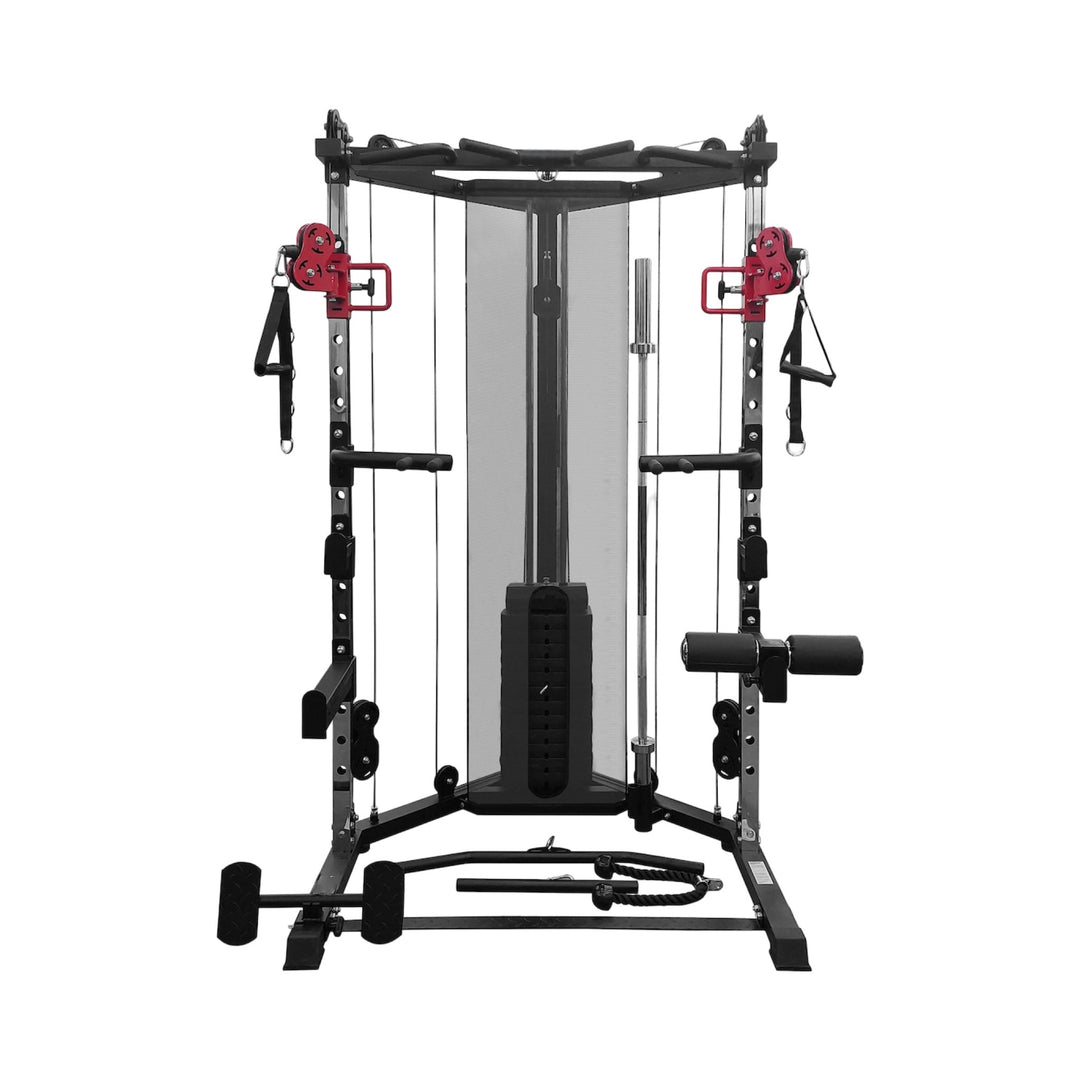
BodyIron® Studio MFT100 Multi Functional Trainer
Compact vs Studio: What Actually Changes
| Factor | Compact Functional Trainer | Full Studio Functional Trainer |
|---|---|---|
| Frame width | Narrower, built to sit closer to walls | Wider, needs more clearance on both sides |
| Weight stack size | Often smaller than a full studio unit | Larger, suited to heavier or more frequent training |
| Exercise variety | Same core cable movements, same attachment system | Same core movements, sometimes more attachment points |
| Best suited to | Apartments, spare rooms, single garage bays | Dedicated gym rooms, double garage bays, studios |
Does Compact Mean Compromised?
Not on exercise range, but sometimes on capacity. A compact functional trainer runs the same dual cable pulley mechanism as a larger unit, so the actual exercises available, chest press, rows, pulldowns, crossovers, core work, don't disappear just because the frame is smaller. Where compact models can differ is weight stack size. If you're training for general fitness, this rarely matters. If heavy loading is specifically your goal, check the maximum resistance figure on the individual product listing before assuming a compact frame matches a full studio unit's capacity.
Is a Compact Functional Trainer Right for You?
- You're training in an apartment, unit, or townhouse where floor space and body corporate rules on floor loading both matter.
- You're using a spare room that also serves another purpose, where a narrower frame leaves more of the room usable for anything else.
- You have a single garage bay and still want to park a car or keep other storage in the same space.
- You're a beginner who doesn't yet need a commercial grade weight stack and would rather prioritise footprint.
- You've been put off functional trainers before by assuming they all need a dedicated gym room. Compact models exist specifically to remove that assumption.
Functional Trainers for Low Ceiling Rooms
A low ceiling functional trainer setup is a slightly different problem to a small footprint, and the two don't always overlap the way you'd expect. A compact frame solves floor space; ceiling clearance is a separate measurement entirely, and a narrow frame can still be too tall for a room with a sloped roofline, exposed beams, or a low garage ceiling.
Three things specifically need overhead clearance on a functional trainer:
- The pulley arms at their highest setting, since a high cable fly or an overhead pulldown needs the arm raised to near its maximum position.
- Any pull-up bar attachment, which needs enough hanging clearance for your full arm extension plus a safety margin above your head.
- Your own overhead pressing range, for cable shoulder presses or any standing overhead movement, which needs room beyond the machine itself.
If your available ceiling height is genuinely tight, a compact frame's smaller footprint does not automatically mean it also has a lower maximum arm height, so this is worth checking as its own figure on the specific product listing rather than assuming compact covers both dimensions at once.
Common Mistakes When Buying for a Small Space
- Measuring only the frame, not the arm swing. The pulley arms need room to move through their full range, which extends beyond the frame's resting footprint.
- Ignoring ceiling height on a sloped or low ceiling room. A garage bay with a sloped roofline can restrict overhead pressing movements even if the floor footprint fits comfortably.
- Assuming smaller always means cheaper. Compact frames are priced on build quality and cable system, not simply on size, so a compact unit isn't automatically the budget option.
- Overlooking wall proximity requirements. Some compact models still need a small gap behind the frame for the weight stack to travel, so check whether it can sit flush against a wall.
- Buying based on floor plan alone without a tape measure. A room that looks spacious in a floor plan can still be tighter in person once furniture, doorways and skirting are accounted for.
Where to Start
Two compact-friendly reference points on this collection, from lightest footprint through to a combo unit that still keeps a narrower frame.
BodyIron® Studio MFT100 Multi Functional Trainer

BodyIron® FT2 Studio All in One Trainer with Smith Machine
Weighing up whether a functional trainer, a Smith machine, or a multi-station gym fits your space best in the first place? Our comparison guide, Functional Trainer vs Smith Machine vs Multi-Station Gym, covers that decision in full before you narrow down to a specific model.
Frequently Asked Questions
Q. What makes a functional trainer compact?
A. A compact functional trainer has a narrower frame, shorter cable arm reach and a smaller overall footprint, built specifically to fit tighter rooms such as apartments, spare rooms or single garage bays.
Q. How much space do I need for a compact functional trainer?
A. Compact functional trainers need less clearance than full studio units, though the exact footprint and required arm swing space should be checked against the specific model.
Q. Can a compact functional trainer still cover a full workout?
A. Yes, a compact functional trainer uses the same dual cable pulley system as larger units, covering pressing, pulling and core exercises, though it may have a smaller weight stack than a commercial grade frame.
Q. Is a compact functional trainer suitable for an apartment?
A. Compact functional trainers are designed with apartment and small room use in mind, with a smaller footprint than studio or commercial grade models.
Q. What ceiling height do I need for a compact functional trainer?
A. Most functional trainers need enough overhead clearance for the pulley arms and any overhead pressing movements, in a similar range to other multi-station equipment.
Q. Does a compact functional trainer sacrifice weight stack size?
A. Compact models can have a smaller weight stack than full sized studio units, so if heavy loading is a priority this should be checked against the specific model's maximum resistance.
Q. Can I fit a compact functional trainer in a single garage bay?
A. A compact functional trainer generally fits a single garage bay comfortably, with more room to spare than a full sized studio or commercial grade unit would need.
Q. Is a compact functional trainer a good choice for a beginner?
A. Yes, a compact functional trainer gives a beginner the same guided cable training experience as a larger unit, just in a smaller footprint, which suits most first time home gym buyers.
Contact us for current offers, discounts and pricing.
Leave a comment