
Smith Machine Exercises: Squats, Bench Press and Full-Body Workouts
A Smith machine alone can support a genuinely complete workout, squats, presses, rows and lunges all use the same guided bar, covering legs, chest, shoulders, back and arms without changing equipment.
The guided path changes how a few of these movements feel compared to free weights, which is worth understanding before you build a routine around it.

Smith Machine Squats
Foot Placement and Bar Path
Because the bar travels in a fixed vertical line rather than the slight natural arc a free barbell makes, foot placement needs to shift slightly forward of where you would stand for a free barbell squat. This keeps your centre of balance aligned with the fixed bar path rather than fighting against it.
Common Squat Variations
Standard stance squats, a narrower stance for more quad emphasis, and a wider stance for more glute and hip involvement are all straightforward to perform on a Smith machine, since the fixed path removes the balance demands that make stance experimentation riskier with a free bar.
Smith Machine Bench Press
Setup and Safety Catch Position
Set the safety hooks just below your chest at the bottom of the press before starting, so a failed rep catches automatically rather than resting on your chest. This single setup step is what makes solo heavy bench pressing genuinely safer on a Smith machine than with a free barbell.
Muscles Worked
A Smith machine bench press primarily targets the chest, with the shoulders and triceps working as secondary muscles through the pressing motion, the same primary muscle groups a free barbell bench press trains.
Free Weight vs Smith Bench Press: Which Is Right for You
Smith machine bench press effectively trains the chest, shoulders and triceps through a guided path, though it recruits fewer stabiliser muscles than a free barbell bench press since the bar does not need to be balanced. Neither is strictly better, a free barbell suits lifters prioritising stabiliser strength and competition-style pressing, while a Smith machine suits solo training and pushing closer to failure safely.
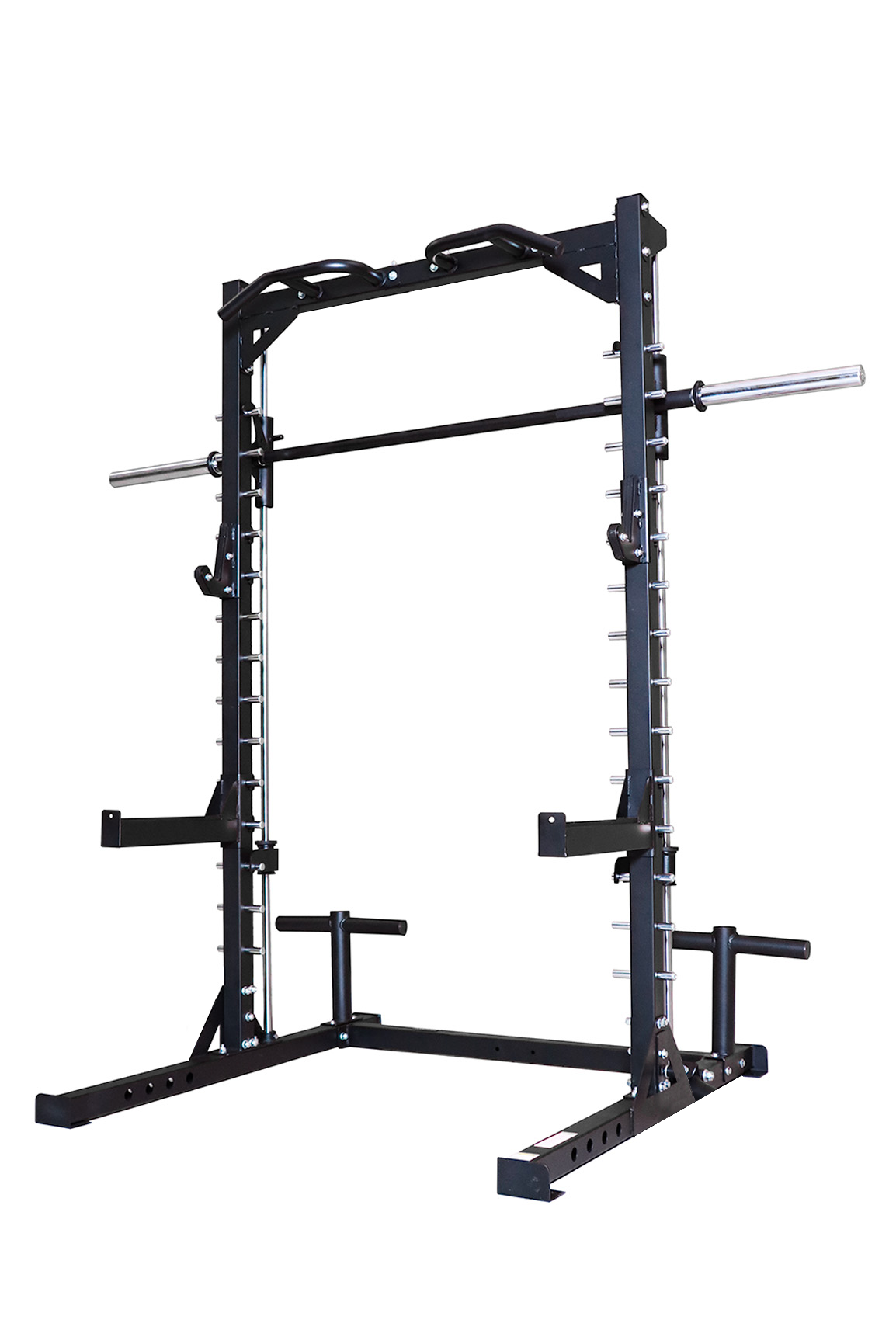
Here's a compact option for building squats and bench press into a home routine:
A Full-Body Smith Machine Workout Structure
A straightforward way to structure a complete session using only a Smith machine:
- Squats, 3 to 4 sets, for quads, glutes and hamstrings.
- Bench press, 3 to 4 sets, for chest, shoulders and triceps.
- Bent-over rows, using the fixed bar hinged forward, for back and biceps.
- Shoulder press, 3 sets, for shoulders and triceps.
- Romanian deadlifts or hip thrusts, for hamstrings and glutes.
- Calf raises, using the bar across the shoulders on a raised platform or step, to finish.
This covers every major muscle group in one session using a single machine. Readers wanting to add lat pulldowns, cable rows or face pulls to round out pulling movements further should see our guide on combo units, Smith Machine with Cables: How All-in-One Smith Trainers Work, since a Smith-only frame does not include a cable station.
Lunges and Split Squats on a Smith Machine
Positioning the bar across the shoulders and stepping into a lunge or split squat stance is a common way to train single-leg strength on a Smith machine. The fixed bar path means your front-to-back foot positioning does the work of controlling balance, rather than the bar itself, which makes this a reasonable place to build single-leg strength before progressing to free weight lunges.
Beginner vs Advanced Programming
Squats, bench presses, shoulder presses, rows and lunges performed on a Smith machine can cover most major muscle groups for a beginner strength program, with the guided path removing much of the technical learning curve free weights demand. Experienced lifters commonly use the same machine differently, for accessory work, fatigue management on heavy training days, or as a safe way to train close to failure without a spotter, not because they need the guidance beginners do.
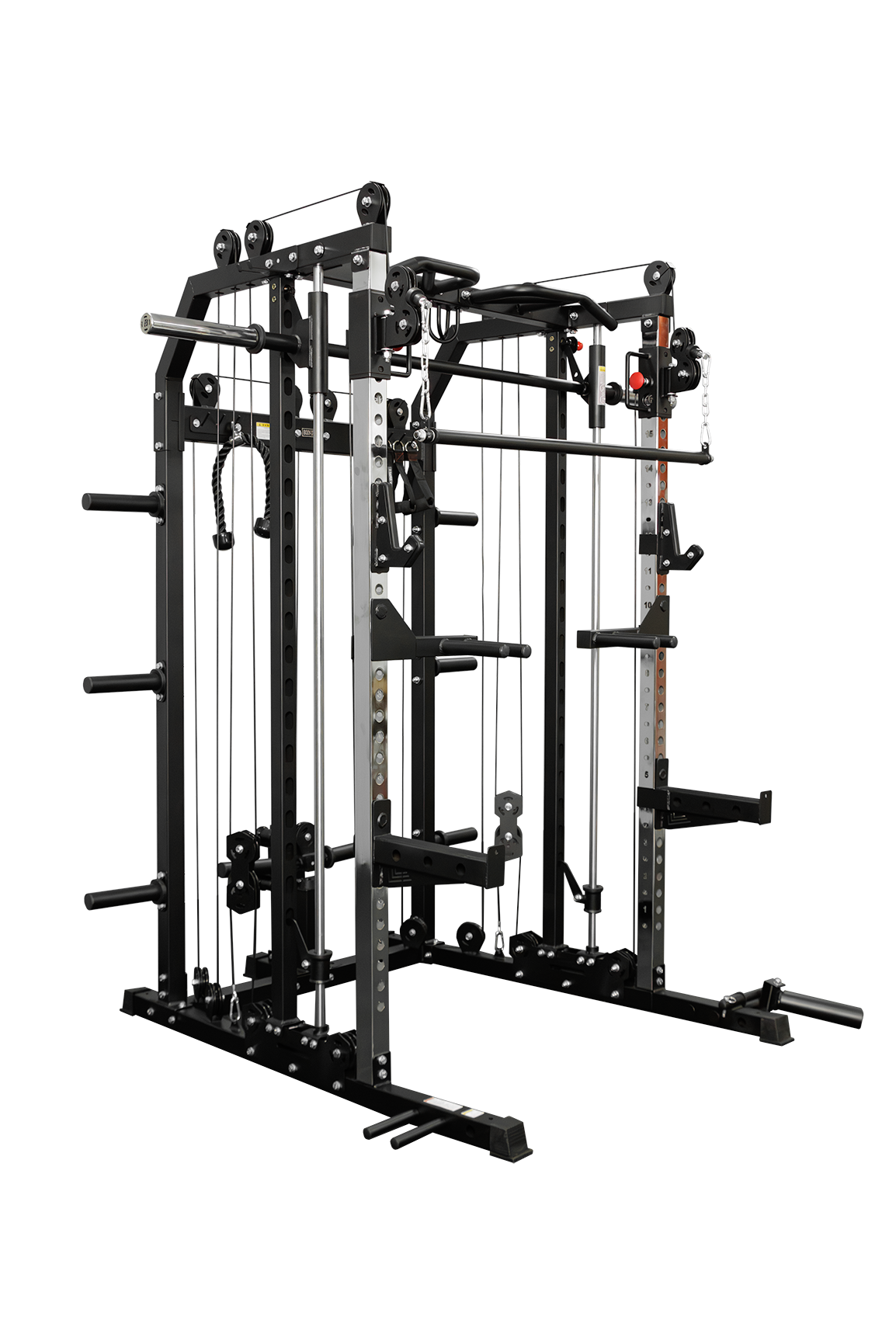
BodyIron® FT2 Studio All In One Trainer with Smith Machine
How the Safety System Works During a Failed Rep
The bar hooks are set at a height just below your working range before the set starts. If you cannot complete a rep, rotating or lowering the bar slightly catches it on the built-in stops rather than it falling further, which is what allows training close to failure alone.
Common Mistakes When Training on a Smith Machine
- Using the same foot placement as a free barbell squat. The fixed bar path needs feet positioned slightly forward, not directly under the bar the way a free squat does.
- Skipping the safety hook setup before benching. Setting the catch height after lying down rather than before is a common and avoidable oversight.
- Assuming Smith machine strength transfers directly to free weight lifts. The reduced stabiliser demand means numbers on a Smith machine will not always match free barbell numbers directly.
- Never varying foot or hand position. Small stance and grip changes across sessions keep a Smith-only routine from feeling repetitive over time.
Where to Start
Two starting points depending on whether cable work is part of your routine:
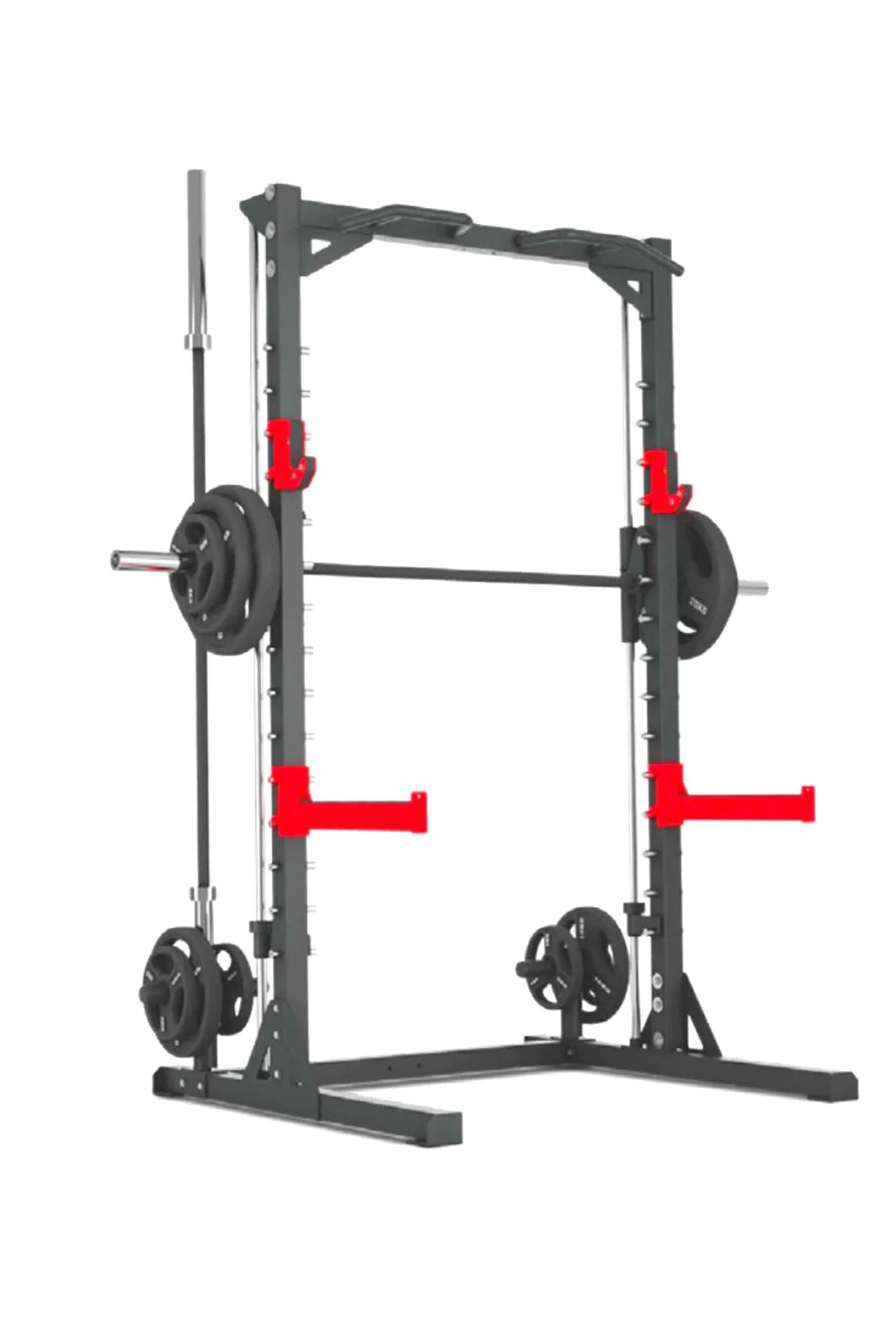
Pro HD Half Rack Smith Machine
- BodyIron® Barbell Pad
- BodyIron® Rising Pro Dip Belt with Chain
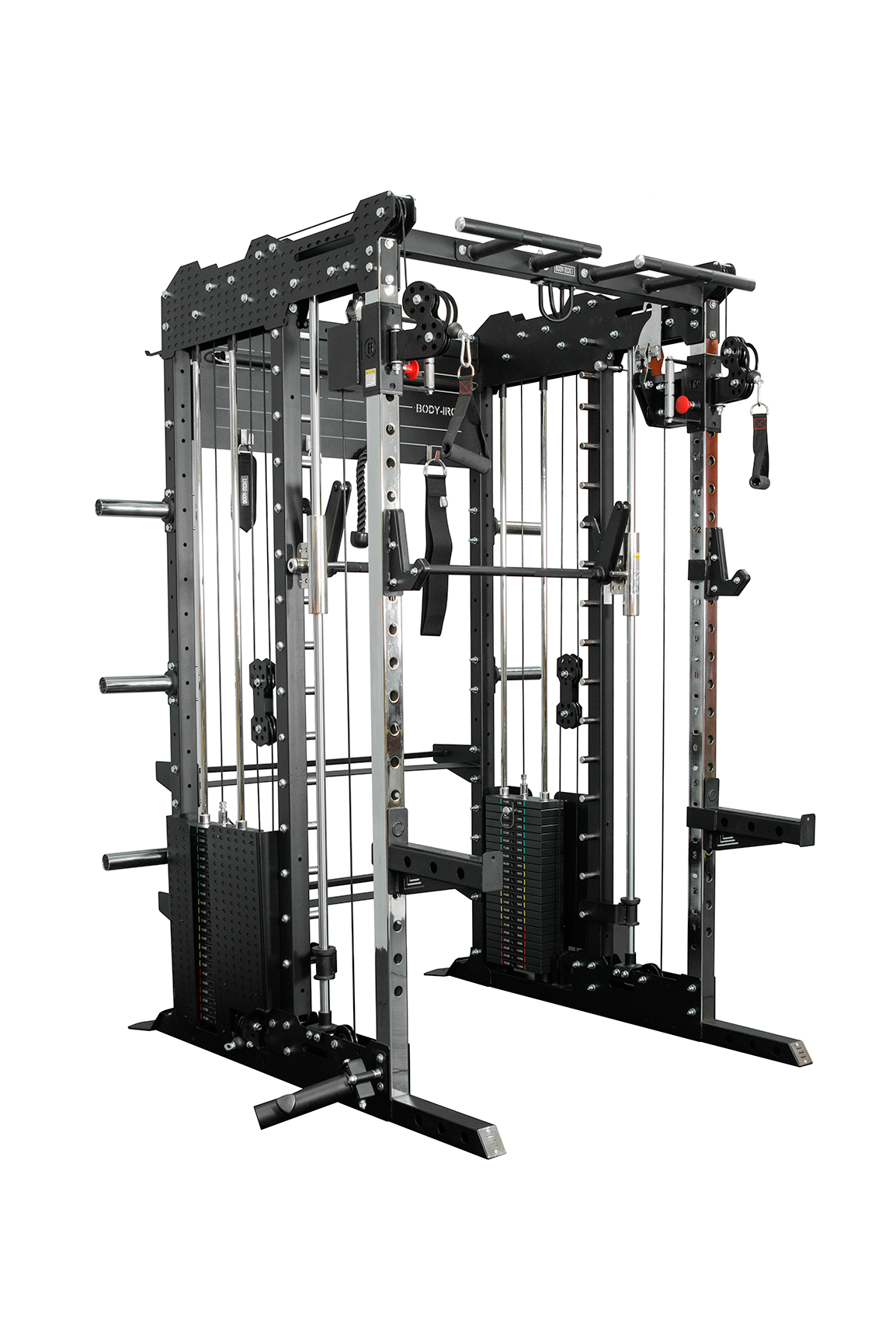
BodyIron® MFX360 Ultimate Trainer
- Dual 220kg weight stacks, two people can train the cable side at once
Buy Smart, Train Hard
Whether you're training squats and bench press on a Smith-only frame or adding cables for a fuller pulling routine, choose the setup that fits your goals, your space and your budget.
Frequently Asked Questions
Q. What exercises can I do with a Smith machine?
A. A Smith machine allows you to perform squats, bench presses, lunges, bicep curls, and more with added control and safety.
Q. Is Smith machine bench press as effective as free weight bench press?
A. Smith machine bench press effectively trains the chest, shoulders and triceps through a guided path, though it recruits fewer stabiliser muscles than a free barbell bench press since the bar does not need to be balanced.
Q. Can I do squats safely on a Smith machine?
A. Yes, the fixed bar path and safety catches make squatting on a Smith machine one of the more beginner-friendly ways to load the movement, though foot placement should be set slightly forward of the bar path to match its fixed trajectory.
Q. What is an assisted bench press machine?
A. An assisted bench press machine, often referring to a Smith machine used for pressing, guides the bar along a fixed path with safety catches, allowing heavier pressing attempts without a spotter.
Q. Can beginners build a full workout using only a Smith machine?
A. Yes, squats, bench presses, shoulder presses, rows and lunges performed on a Smith machine can cover most major muscle groups for a beginner strength program.
Q. What muscles does a Smith machine bench press work?
A. A Smith machine bench press primarily targets the chest, with the shoulders and triceps working as secondary muscles through the pressing motion.
Q. Can I do lunges or split squats on a Smith machine?
A. Yes, positioning the bar across the shoulders and stepping into a lunge or split squat stance is a common way to train single-leg strength on a Smith machine.
Q. How do the safety catches work during a failed Smith machine rep?
A. The bar hooks are set at a height just below your working range, so if you cannot complete a rep, rotating or lowering the bar slightly catches it on the built-in stops rather than it falling further.
Buy Smart, Train Hard
Find the best Smith machines in Australia for home and commercial gyms.
Shop the Smith Machine Range
Leave a comment