
What Is an All-in-One Functional Trainer? How It Works and Who It's For
An all-in-one functional trainer is a single frame built around two independent cable pulley towers, letting one machine cover the pressing, pulling and core work that would otherwise need several separate pieces of equipment. If you've been comparing home gym options, you've probably noticed the same machine turning up under a few different names: functional trainer, cable crossover, multi-station. They're not all the same thing, and the differences matter once you're the one paying for floor space.
This guide covers how an all-in-one functional trainer actually works, who it genuinely suits, and where its limits are, so you're not choosing based on a photo.
How an All-in-One Functional Trainer Works
Strip away the marketing and a functional trainer comes down to four working parts.
Two Independent Cable Towers
Rather than one fixed lever arm, a functional trainer runs two separate cables through pulleys mounted on sliding carriages. Each side moves up and down its own track, which is what lets you set the resistance angle for a high cable fly, a low row, or anything in between, instead of being locked into one predetermined movement path.
A Shared Weight Stack (or Two)
Resistance comes from a selectorised weight stack behind each tower, connected to the pulley by aircraft rated steel cable. On combo units, the same stack also powers any Smith bar or lat pulldown attachment built into the frame, so you're not paying for separate resistance systems bolted onto one another.
Interchangeable Attachments
A single handle grip, a straight bar, a rope, and an ankle cuff turn the same two cables into a chest press, a tricep pushdown, a face pull, or a cable crunch. This is the actual source of a functional trainer's exercise variety, not the frame itself.
Constant Tension Through the Movement
Because the resistance comes from a cable rather than gravity acting straight down on a bar, the muscle stays under load through the full range of motion, including at the top and bottom of a rep where a barbell movement would normally go slack.
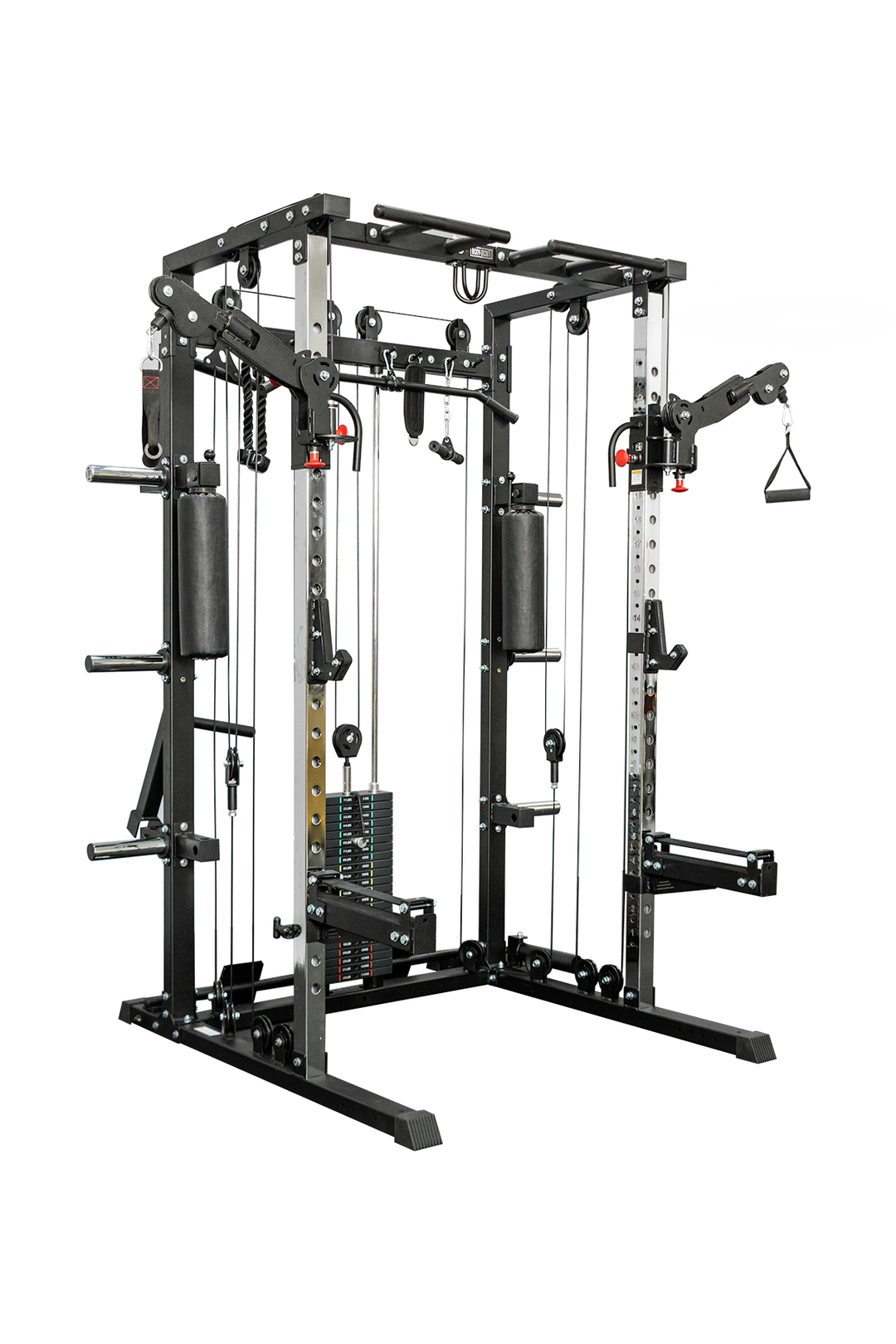
BodyIron® Studio X9 All in One Trainer
Who an All-in-One Functional Trainer Is For
Space-Limited Home Gym Owners
If you've got one room or one garage bay to work with, a functional trainer replaces what would otherwise be a chest press, a lat pulldown, a cable crossover and a tricep station, all sharing one frame and one footprint.
People Training Alone
Because a cable simply goes slack if you let go of the handle, a functional trainer is a safer way to train close to failure without a spotter than a loaded barbell is. That's a genuine reason solo lifters gravitate toward these machines rather than free weights alone.
Beginners Learning Movement Patterns
The pulley path is fixed enough to guide you toward correct form, but adjustable enough that you're still building real strength and coordination rather than following a completely locked track like a machine at a commercial gym.
Intermediate Lifters Who Want Circuit Variety
Once you've outgrown a single lat pulldown or cable station, a functional trainer's attachment range lets you move between exercises in seconds rather than resetting a whole machine, which is the main reason they suit circuit style training.
Is a functional trainer actually worth it, though? For most home users, yes, on the basis of exercise variety per square metre of floor space rather than raw weight capacity. If your priority is heavy barbell squats and deadlifts, a functional trainer is not the machine for that, and you're better served by a squat rack. If your priority is covering strength training across your whole body in a single unit, it's one of the more efficient ways to do it.
Functional Trainer, Smith Machine, or Multi-Station: They're Not Interchangeable
A genuinely common point of confusion is treating “functional trainer,” “Smith machine,” and “multi-station gym” as three names for the same thing. They're not. A Smith machine guides a barbell along a fixed vertical rail for squats and presses. A multi-station gym uses fixed levers built around one shared weight stack for specific exercises. A functional trainer is the cable based option in between, and several models, including the BodyIron® FT2 Studio below, combine a functional trainer's cables with a Smith bar on the same frame. We've covered that comparison in full detail separately if you're deciding between the three.

BodyIron® FT2 Studio All in One Trainer with Smith Machine
Common Buying Mistakes
- Judging capacity by frame size alone. Weight stack size and cable rating matter more than how large the frame looks in a photo.
- Assuming every functional trainer includes a Smith bar or pull-up station. Attachments vary by model, so check the specific listing rather than assuming.
- Buying on price alone at the entry tier. A lighter frame and basic cable system are fine for occasional use, but frequent heavy training is better served by a mid tier or commercial grade unit.
- Not measuring pulley arm swing space. The footprint listed for a machine is usually just the frame, not the space the arms sweep through during a cable fly or crossover.
Where to Start
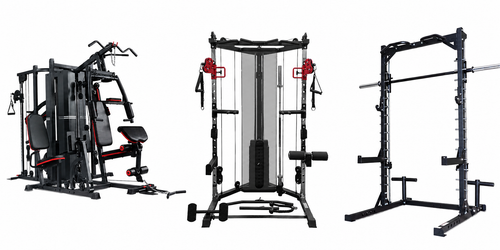
Three points on the range, from a compact entry unit through to a combo frame with a built in Smith machine.
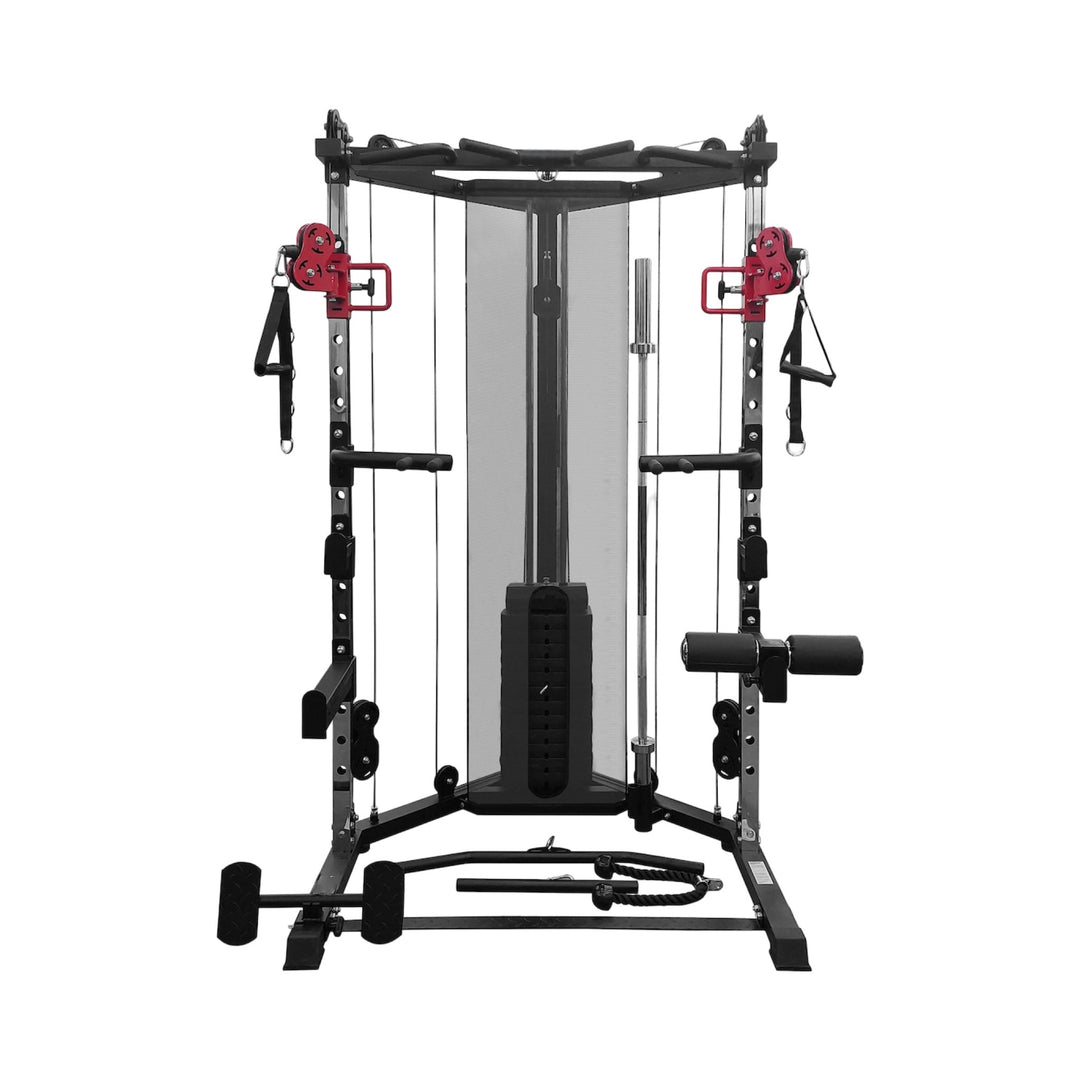
BodyIron® Studio MFT100 Multi Functional Trainer
BodyIron® FT2 Studio All in One Trainer with Smith Machine
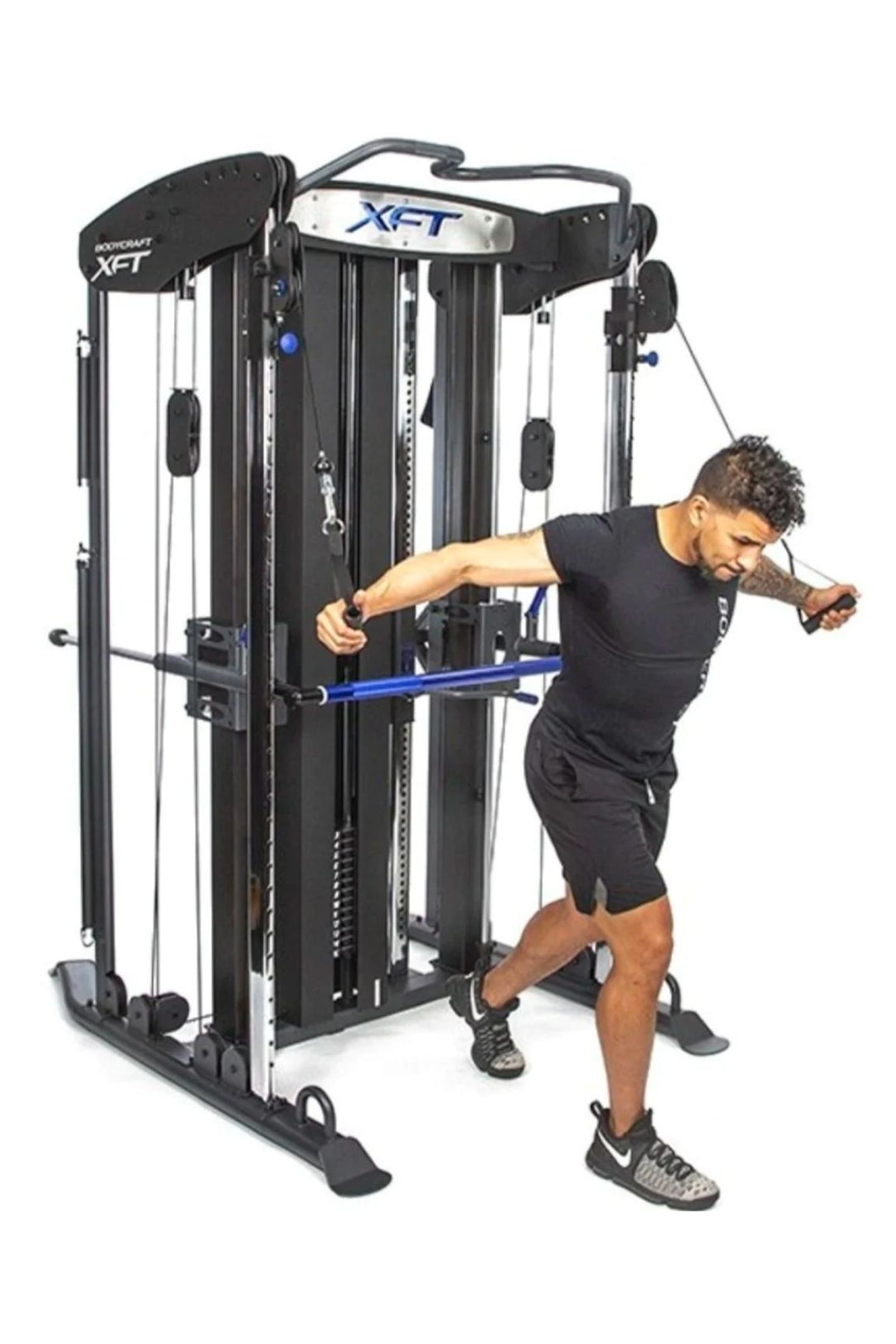
Bodycraft XFT Functional Trainer
Frequently Asked Questions
Q. What is an all-in-one functional trainer?
A. An all-in-one functional trainer is a single frame that combines a dual cable pulley system with attachments for pressing, pulling, squatting and core work, replacing several separate machines with one unit.
Q. How does the cable pulley system on a functional trainer work?
A. Two independent weight stacks connect to adjustable pulley arms, so each side moves through its own range of motion for exercises like presses, rows and curls, rather than being locked to a single fixed path.
Q. What exercises can I do on an all-in-one functional trainer?
A. Chest press, seated row, lat pulldown, cable crossover, tricep pushdown, bicep curl and core rotations are all possible on a standard functional trainer, with the exact list depending on the attachments included.
Q. Is a functional trainer good for beginners?
A. Yes, the guided cable path makes it easier to learn correct movement patterns safely compared with free weights, which makes it a reasonable starting point for beginners.
Q. Can advanced lifters get a full workout from a functional trainer alone?
A. Advanced lifters can cover most accessory and isolation work on a functional trainer, though many still pair it with a squat rack or free weights for heavy compound lifts like back squats and deadlifts.
Q. What is the difference between a functional trainer and a cable crossover machine?
A. A cable crossover machine is typically a dedicated two tower unit built for crossover and fly movements, while a functional trainer is a broader single frame covering crossover style exercises plus pressing, pulling and often a Smith bar or bench.
Q. Do all functional trainers include a pull up bar?
A. Not all models include a pull up bar, so this should be checked against the specific unit rather than assumed.
Q. How much floor space does a functional trainer typically need?
A. Floor space depends on the model, with compact units needing less clearance than full studio or commercial grade frames. Check individual product specifications for exact dimensions.
Contact us for current offers, discounts and pricing.
Leave a comment