
Compact Home Gyms for Small Spaces: Sizing, Placement and Setup Guide
A compact home gym works when it is built around one or two pieces of equipment that genuinely match your training goal and your room, not when it is the smallest thing you could find.
Getting the sizing, placement and equipment choice right the first time is what separates a small space gym that gets used daily from one that becomes a clothes rack within a month.
What Counts as a Compact Home Gym
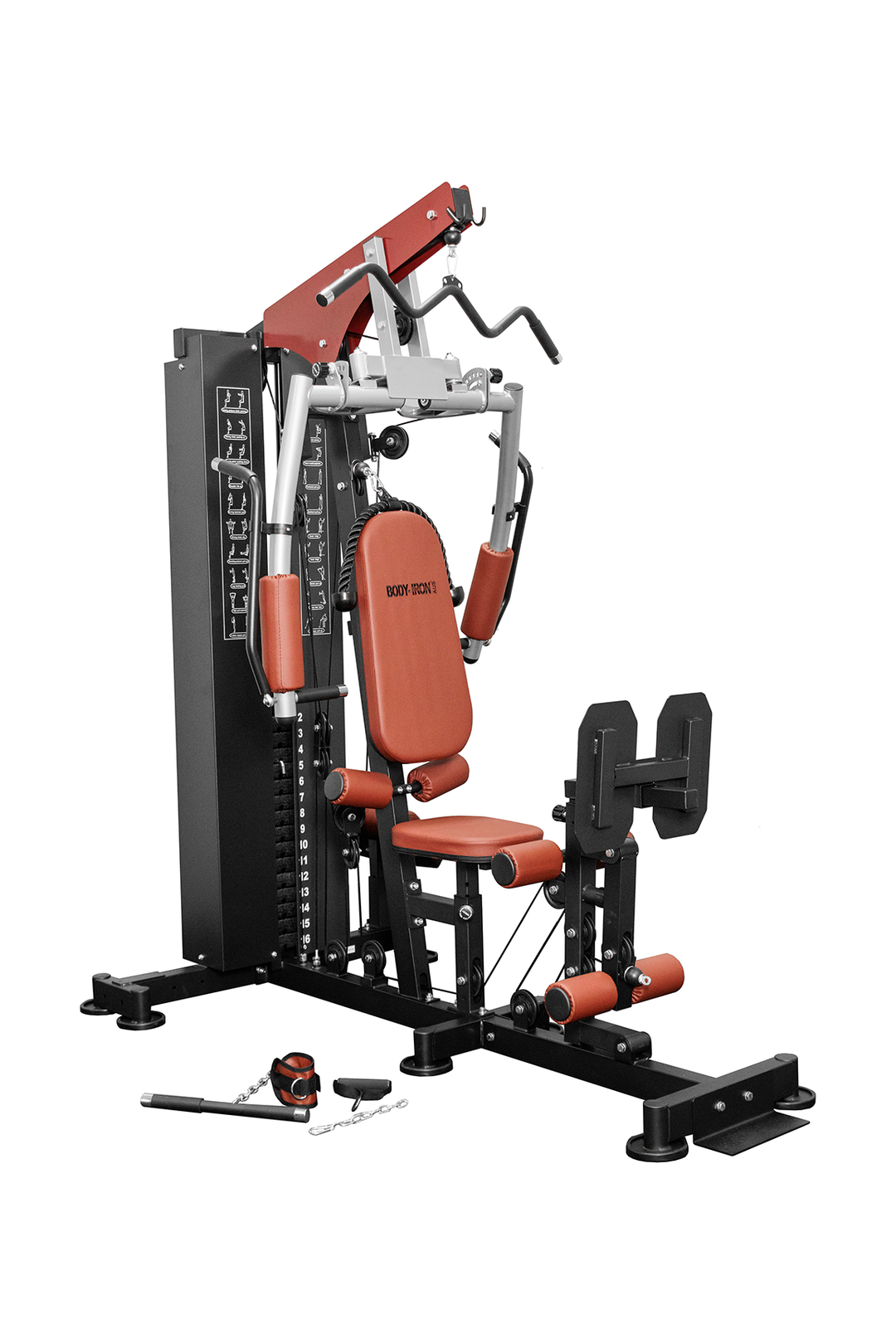
A compact home gym is a multi station or all-in-one unit built around a single weight stack rather than several independent stations, which keeps the footprint close to that of a single exercise bike while still covering chest, back and leg movements.
The trade off is fewer simultaneous stations, not fewer exercises, since most compact units still adjust between chest press, lat pulldown and leg press positions.
Measure Your Room Before You Shortlist Anything
The single most common mistake in small space planning is choosing a model online before confirming it will fit with room to actually use it safely.
Apartments and Spare Rooms
A cleared corner of roughly two by two metres is enough for most compact units, provided the ceiling clears close to 2.1 metres for overhead pulldown movements. Check the packed carton width against your narrowest doorway and any stairwell it needs to travel through, since the main frame section can be wider than the assembled footprint suggests.
Garages
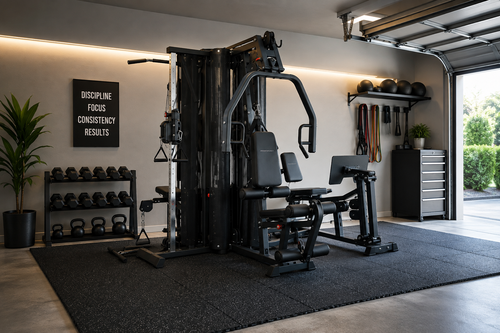
A single car garage bay generally has enough width for a compact multi station gym positioned against the back or side wall, alongside a parked car, once the same ceiling and clearance checks are done. Roller doors and support beams are the two things people forget to check until delivery day.
Clearance Around the Machine
Footprint is only half the equation. Budget roughly half a metre to one metre of clearance on open sides of the machine for pulley arms and for getting on and off each station safely. A unit that fits the room on paper can still feel cramped and unsafe in daily use if this clearance is skipped.

Placement and Layout Tips
-
Anchor to a corner. Placing the unit against two walls rather than floating it in the middle of the room frees up the rest of the space for stretching, flooring and storage.
-
Keep the floor clear. Wall hooks for bands and small accessories keep the working area open, which matters more in a small room than a large one.
-
One flooring colour, edge to edge. A single run of rubber flooring under and around the machine reads as a larger, more intentional space than a patchwork of mismatched mats, and protects the subfloor from point loads and vibration either way.
Choosing Between Compact Multi Station, All-in-One and Single Station
Three equipment types cover most compact scenarios, and the right one depends on how much variety you want against how little floor space you have.
Compact Multi Station
A compact multi station unit with a single stack covers chest press, lat pulldown and leg press in one frame, and is the best starting point for general strength training in a smaller room.
All-in-One Trainer
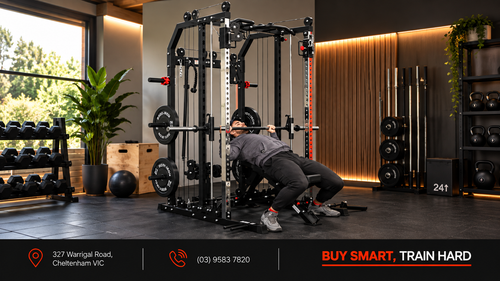
An all-in-one trainer combines a functional trainer with a power rack or Smith machine function in a single footprint, which suits buyers who want free weight style movements alongside cable work without adding a second piece of equipment.
Single Station
A single station gym is the smallest footprint option, built around one shared pulley system rather than multiple stations, and suits solo users with the tightest space or budget constraints.

Set a Budget for a Compact Setup
-
Entry tier: a single stack compact multi station unit, suited to general strength training and beginners building a consistent habit.
-
Mid tier: a compact unit with a leg press included, suited to buyers who want more exercise variety without adding floor space.
-
Space saving alternative: an all-in-one trainer where an even tighter footprint matters more than multiple simultaneous stations.
Match the Model to Your Space
Once your space and priorities are clear, use this table to shortlist a starting model. This is the only section carrying product and collection links, kept in one place rather than scattered through the article.
|
If your priority is |
Start with |
|---|---|
|
Smallest footprint, general fitness |
|
|
Compact with leg press included |
Body Iron Studio S250 |
|
Prefer an all-in-one trainer over multi station |
|
|
Comparing multi station sizes side by side |
|
|
Browsing the full compact range |
Common Mistakes in Small Space Setups
-
Choosing the biggest unit that technically fits. A machine that fits the room but leaves no clearance to use it safely is expensive to correct after delivery.
-
Skipping flooring to save budget. Flooring is one of the cheapest ways to protect both the equipment and the room, and going without it tends to cost more later in subfloor damage or noise complaints.
-
Buying single purpose equipment too early. A dedicated leg press or cable station is a great addition to an established gym, but in a small space starting from scratch, a compact multi function unit delivers more training value per square metre.
-
Underestimating overhead clearance. Factor in height plus arm extension plus bar or handle travel for overhead movements, not just the machine's stated minimum ceiling height.
Shop Compact Home Gym Solutions
Whichever priority matters most to you, browse the models below. Click any machine to view full specifications, features, pricing and availability.


Frequently Asked Questions
Q. What counts as a compact home gym?
A. A compact home gym is a multi station or all-in-one unit designed to fit a garage corner, spare room or apartment, typically with a narrower footprint and a single weight stack rather than multiple stacks.
Q. Can a home gym fit in an apartment?
A. Yes, provided the ceiling height clears roughly 2.1 metres for overhead pulley movements and the floor can bear the machine's static weight, which is rarely an issue on a standard concrete or timber apartment floor.
Q. What is the smallest multi station home gym available?
A. The smallest multi station frames are built around a single weight stack with two or three stations, trading some exercise variety for a footprint close to that of a single exercise bike.
Q. Do compact home gyms sacrifice exercise variety?
A. Not significantly. Most compact multi station machines still cover chest press, lat pulldown, cable crossover and leg press in one frame, which covers the major muscle groups a beginner to intermediate lifter needs.
Q. How do I measure my space before buying a compact home gym?
A. Measure the clear floor length and width where the machine will sit, add roughly half a metre of clearance on each open side for pulley arms, and check the ceiling height against the model's overhead pulley requirement.
Q. Can a compact home gym be moved once assembled?
A. Most compact home gyms can be repositioned by two people once assembled, since the frame sits on floor stabilisers rather than being bolted down, though moving it disassembled is easier for stairs or tight corners.
Q. Is a compact home gym enough for serious strength training?
A. A compact home gym with a sufficiently heavy weight stack and a leg press station supports serious strength training for most home users, though committed powerlifters typically still add a squat rack and free weights over time.
Q. What is the difference between a compact home gym and a full-size multi station gym?
A. A compact home gym trims the footprint by reducing station count or using a shared pulley system, while a full-size multi station gym keeps independent stations for more simultaneous exercise options at the cost of floor space.
Checkout our Home Gym collection to know more
Leave a comment