
How Much Does an All-in-One Functional Trainer Cost in Australia?
At World Fitness Australia, all-in-one functional trainers currently range from around $599 for an entry level unit up to nearly $7,000 for a full commercial grade studio trainer, with most home buyers landing between $2,500 and $5,000 for a well specced mid tier model.
Price is usually the first real filter people apply once they've decided a functional trainer is the right category, and it's also one of the least clearly explained parts of buying one, since two machines that look similar in photos can sit $3,000 apart once you compare frame steel, weight stack size and included attachments. This guide breaks the range down by tier with real current pricing, explains exactly what drives the difference, and helps you find the best value functional trainer for your specific budget rather than the cheapest one on the page.
All-in-One Functional Trainer Price Tiers at a Glance
| Tier | Price Range | What You Get | Example |
|---|---|---|---|
| Entry | $599 – $1,499 | Compact frame, single cable system, smaller weight stack, suited to lighter home use | BodyIron® Studio MFT100 |
| Mid | $1,999 – $2,999 | Full dual cable system, larger weight stack, some models add a Smith bar combo | BodyIron® FT2 Studio / Studio X9 |
| Upper-Mid | $4,399 – $4,999 | Heavier frame, bundled bench or accessory package, built for frequent use | BodyIron® FT750 / Bodycraft MFT |
| Commercial-Grade | $5,399 – $6,999 | Commercial-rated frame and components, largest weight stacks, built for daily heavy use | BodyIron® MFX360 / Bodycraft XFT |
What Actually Determines the Price
- Frame steel gauge. A heavier gauge steel frame costs more to manufacture and generally handles frequent heavy use better than a lighter entry-level frame.
- Weight stack size. Larger stacks cost more and support heavier loading, which matters more to intermediate and advanced lifters than to someone training for general fitness.
- Cable and pulley quality. Aircraft-rated cable and smoother pulley bearings cost more but hold up better over years of use than budget alternatives.
- Included attachments and accessories. A bundled bench, dip station, or expanded attachment set adds to the price but also adds genuine exercise range from day one.
- Whether a Smith bar is built in. Combo units carry the added steel and engineering of a second guided system, which is reflected in the price.
- Warranty length. Longer warranties generally track with heavier-duty components, so warranty length is a reasonable proxy for build quality when comparing similarly priced models.
Cheapest All-in-One Functional Trainer Options
A cheap functional trainer isn't necessarily a bad one, but it is a narrower one. Entry-level and bench-and-rack combo units sit at the lower end of the range specifically because they use a lighter frame, a smaller weight stack, and fewer attachments than mid-tier and commercial models. For someone training a few times a week at moderate intensity, that trade-off is often a reasonable one. For someone planning frequent heavy sessions, the lighter frame and smaller stack are worth weighing against a mid-tier unit before buying on price alone.
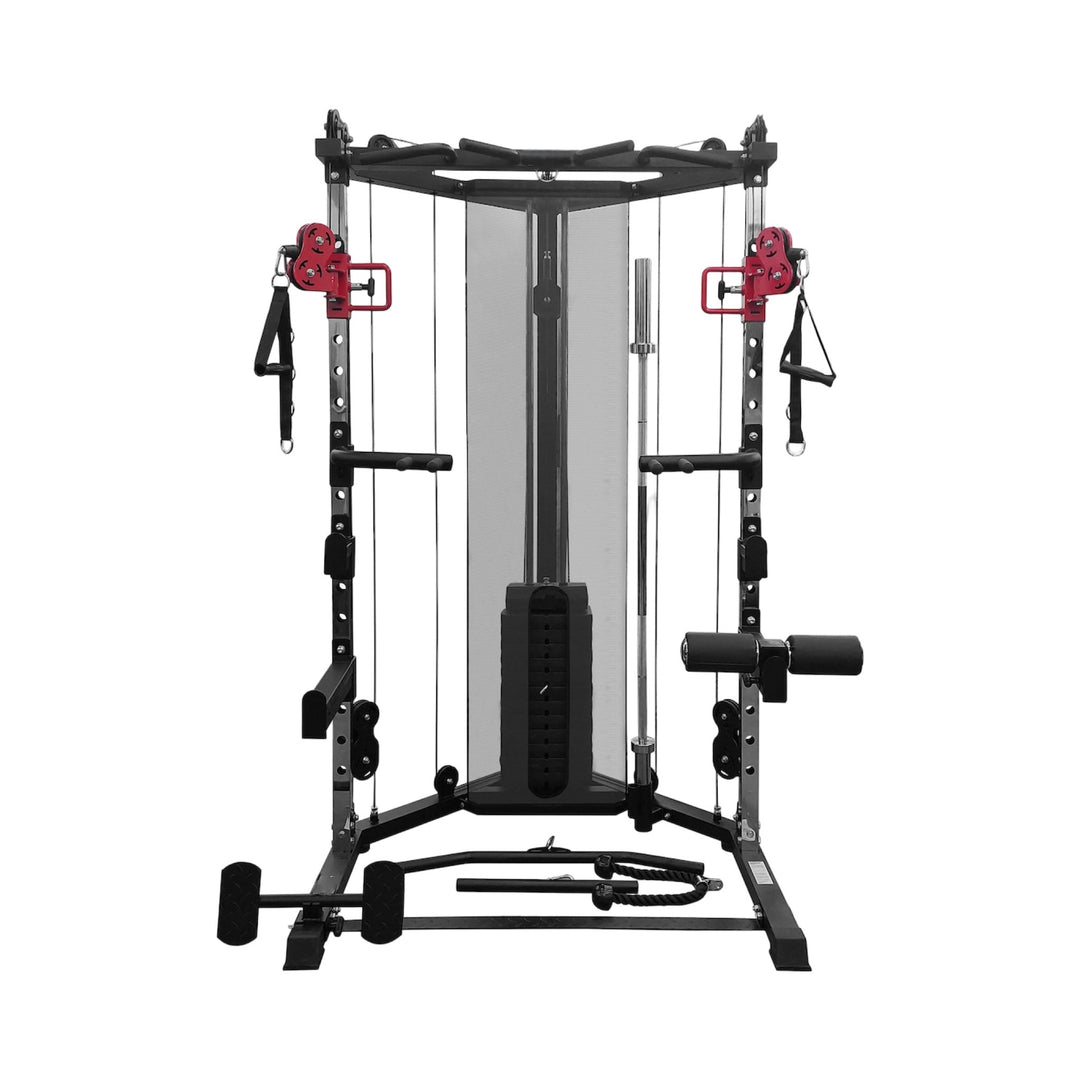
BODYIRON® STUDIO
BodyIron® Studio MFT100 Multi Functional Trainer
The most compact and affordable entry point into this collection, suited to lighter home use and smaller spaces rather than frequent heavy training.
- Compact frame footprint
- Full cable-based exercise range
- Suited to general fitness and light to moderate training
$1,899.00 $1,299.00 Save $600.00
VIEW PRODUCTBest Value Functional Trainers in the Mid-Range
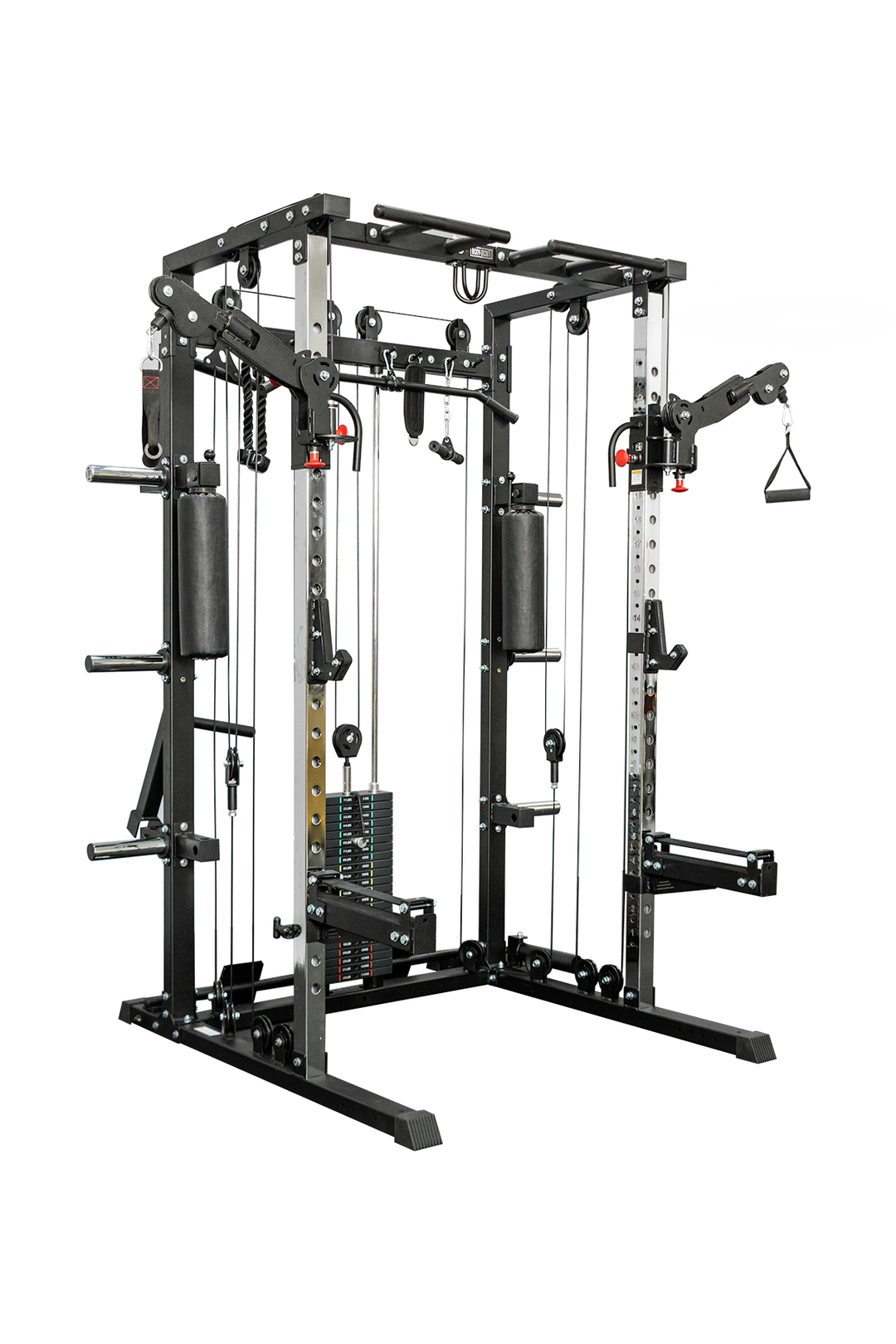
If you're after the best value functional trainer rather than the outright cheapest, the mid tier is generally where the balance sits. A genuine dual cable system, a weight stack that supports real strength progress, and in some cases a built-in Smith bar, all without stepping up to commercial-grade pricing.

Commercial-Grade Pricing: Why It Costs So Much More
Commercial-grade units use a heavier steel frame, larger dual weight stacks, and components rated for constant daily use rather than a few sessions a week. That difference in duty cycle is the main reason these frames sit well above home-use pricing, since the manufacturing cost to survive years of continuous commercial use is genuinely higher, not just a brand premium.
Does a Functional Trainer with a Smith Machine Cost More?
Generally yes. Adding a Smith bar and its counterbalance system to a functional trainer's frame increases the steel and engineering required compared with a cable-only unit, which is reflected in the price. The FT2 Studio above is a useful reference point: a combo frame at a similar price to several cable-only mid-tier units, rather than a significant premium on top.
We've covered the full functional trainer versus Smith machine decision, including combo units, in a separate comparison guide if you're still weighing that choice: Functional Trainer vs Smith Machine vs Multi-Station Gym.
Is It Cheaper to Buy One Machine or Several Separate Ones?
Yes, in almost every case. A single functional trainer combining multiple stations is generally cheaper than buying a chest press, a cable crossover, and a lat pulldown as separate machines, since the frame and weight stack are shared across all of them rather than duplicated. This is also the main reason functional trainers suit space-limited buyers better than assembling equivalent capability piece by piece.
Are Foldable Functional Trainers Cheaper?
Not necessarily. Foldable functional trainers are priced based on their build quality and cable system rather than the folding mechanism alone, so a foldable unit can sit anywhere across the price range depending on its frame and weight stack. Compare foldable and fixed-frame models on the same specifications rather than assuming folding automatically means a lower price.
Payment Plans and Ways to Spread the Cost
Buy Now Pay Later is available through Afterpay and Zip at checkout, alongside standard card and digital payment options including Apple Pay, Google Pay and PayPal, which can make a mid or upper-tier unit more manageable without committing to the full price upfront.
Common Mistakes When Budgeting for a Functional Trainer
- Buying on price alone at the entry tier. A lighter frame and smaller weight stack are fine for occasional use, but frequent heavy training is better served by a mid tier or commercial grade unit.
- Not comparing weight stack size across similarly priced models. Two functional trainers at the same price point can have meaningfully different maximum resistance.
- Assuming a combo unit always costs significantly more. Some Smith machine combo frames sit within the same price band as cable-only mid-tier units.
- Ignoring what's actually included. A lower headline price with fewer attachments can end up costing more once you buy the missing accessories separately.
- Not checking current promotions before comparing prices. Sale pricing changes regularly, so compare current listed prices rather than relying on a figure seen previously.
Where to Start
Four reference points, one from each tier.

Frequently Asked Questions
Q. How much does an all-in-one functional trainer cost in Australia?
A. At World Fitness Australia, functional trainers currently range from around $599 for an entry level unit up to nearly $7,000 for a full commercial grade studio trainer, with most home buyers landing between $2,500 and $5,000 for a well specced mid tier model.
Q. What is the cheapest all-in-one functional trainer available?
A. Entry level functional trainers and bench and rack combo units sit at the lower end of the range, generally suited to lighter home use rather than frequent heavy training.
Q. What is a realistic mid range budget for a functional trainer?
A. A mid range functional trainer with a genuine dual cable system and a reasonable weight stack generally sits between $2,500 and $5,000, covering most home training needs without stepping up to commercial grade.
Q. Why do commercial grade functional trainers cost so much more?
A. Commercial grade units use a heavier steel frame, larger dual weight stacks, and components built to withstand frequent daily use, which pushes the price well above home use models.
Q. Does a functional trainer with a Smith machine cost more than one without?
A. Generally yes, since adding a Smith bar and its counterbalance system to the frame increases the steel and engineering required compared with a cable only unit.
Q. Are foldable functional trainers cheaper than fixed frame units?
A. Not necessarily. Foldable functional trainers are priced based on their build quality and cable system rather than the folding mechanism alone, so price should be compared model to model.
Q. Is it cheaper to buy a functional trainer than separate cable and press machines?
A. Yes, a single functional trainer combining multiple stations is generally cheaper than buying a chest press, cable crossover and lat pulldown as separate machines, since the frame and weight stacks are shared.
Q. Are payment plans available for functional trainers?
A. Yes, Buy Now Pay Later is available through Afterpay and Zip at checkout, alongside standard card and digital payment options.
Contact us for current offers, discounts and pricing.
Leave a comment