
Smith Machine vs Power Rack vs Squat Stand: Which One Do You Need
A Smith machine, a power rack and a squat stand all support the same core lifts, squats, presses, pulls, but they solve different problems, and none of them is a strictly better version of another.
The right one depends on whether you train alone, how much you value a free barbell path, and how much floor space and budget you have to work with. This guide compares all three on their own terms rather than crowning a winner.
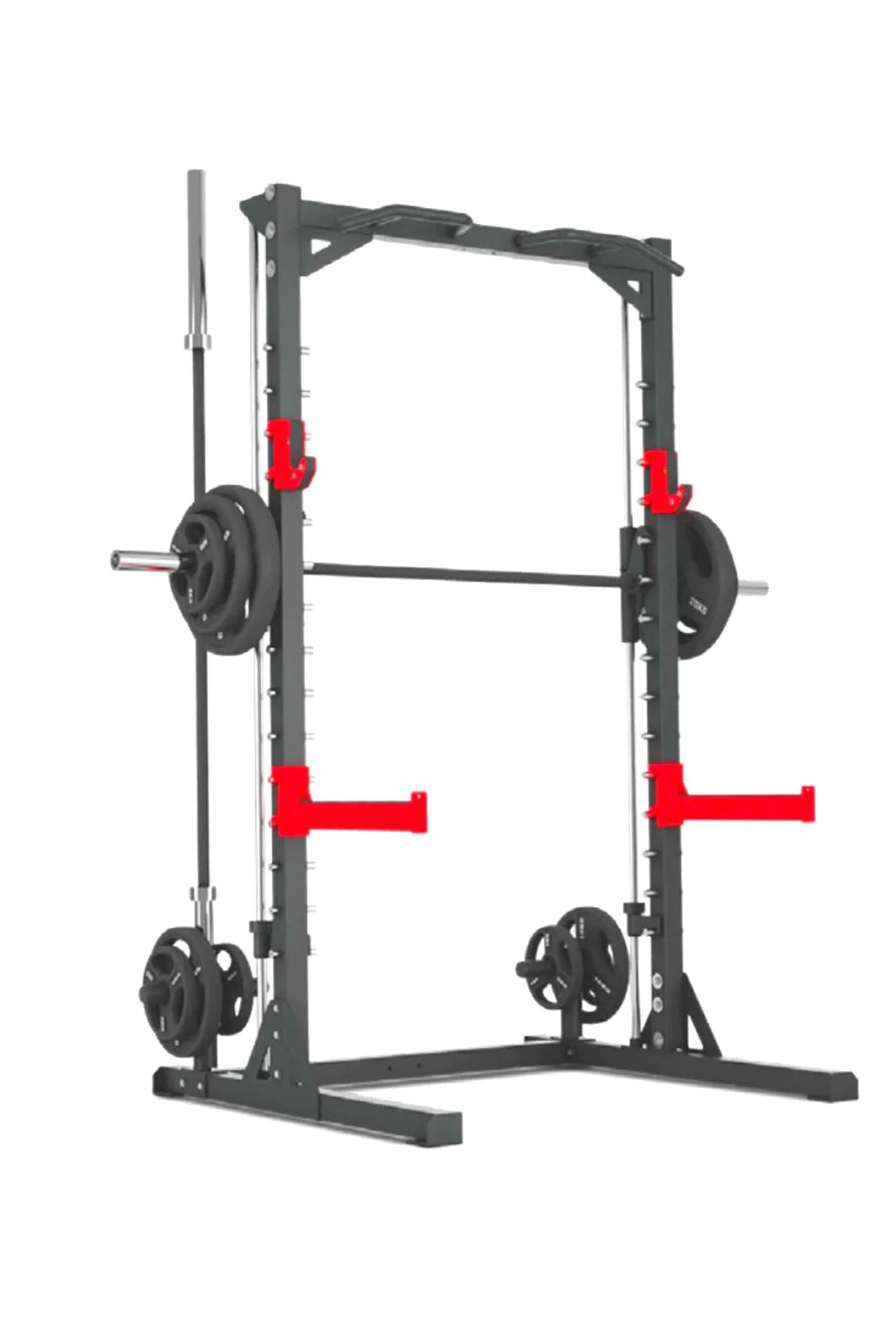
Pro HD Half Rack Smith Machine
- BodyIron® Barbell Pad
- BodyIron® Rising Pro Dip Belt with Chain
The Three Options, Explained
Smith Machine
A barbell fixed inside vertical rails, moving along a guided path with safety hooks built into the frame. This is the only one of the three that removes the need to balance the bar yourself, which is what makes it a genuine option for solo training at heavier loads.
Power Rack
A four-post cage holding a free barbell on adjustable J-hooks, with movable safety pins to catch a failed rep. The bar moves entirely freely in your hands, the rack only supports it between sets and catches it if a lift fails, which preserves the natural bar path a free barbell makes.
Squat Stand
A simpler two-post frame supporting a free barbell on adjustable hooks, without the four-sided enclosure of a full power rack. It offers the same free bar movement as a power rack in a smaller footprint, at the cost of fewer attachment points and a more basic safety setup.
Key Differences at a Glance
- Bar movement. A Smith machine guides the bar along a fixed path. A power rack and squat stand both leave the bar entirely free, which is closer to how competition lifting and most sports movements actually work.
- Solo safety. A Smith machine's built-in hooks catch the bar automatically at any point along the track. A power rack's safety pins need to be set at the correct height before the set starts to do the same job. A squat stand offers the least built-in safety of the three, since it has no cage or pins to catch a failed rep beyond the hooks themselves.
- Footprint. A squat stand is generally the smallest of the three, a half rack Smith machine is comparable, and a full power rack typically needs the most floor space, since it is fully enclosed on four sides.
- Versatility and attachments. A power rack usually supports the widest range of attachments, dip bars, landmine, pull-up bar variations, since its four-post structure gives more mounting points. A Smith machine and squat stand are generally more limited in this respect.
- Price. All three span a wide range depending on steel gauge and features, so price alone is not a reliable way to choose between categories.
Which One Fits Your Training Style
If You Train Alone Most of the Time
A Smith machine's built-in safety catches remove the single biggest risk of solo training, a failed rep with no spotter. This is the strongest single reason people choose one over a power rack or squat stand.
If You Want Free Barbell Movement Above All
A power rack or squat stand preserves the natural bar path a Smith machine's fixed rails do not allow. If you are training for competition lifting or simply prefer the feel of a completely free bar, this matters more than the added safety a Smith machine offers.
If Space or Budget Is the Main Constraint
A squat stand or half rack Smith machine both offer a smaller footprint than a full power rack. Between the two, the choice comes down to whether guided safety or free bar movement matters more to you in that constrained space.
If You Want Maximum Versatility Long Term
A power rack's four-post structure generally supports the widest range of attachments over time, which suits buyers planning to expand their training setup gradually rather than buying everything at once.
Common Terms That Cause Confusion
- Assisted squat machine. This term generally refers to the same guided, supported bar path a Smith machine provides, not a separate category of equipment.
- Multipower squat machine. Multipower is another name used for a Smith machine in some markets, describing the same fixed vertical bar design.
Can They Work Together?
For guided, solo strength training, a Smith machine can cover most of what a power rack does. What it does not replace is the fully free barbell path a power rack allows, so committed lifters who want both often use a Smith machine for solo heavy days and free weight training separately when a spotter or training partner is available. Some power rack systems support a Smith bar attachment, but this depends entirely on the specific rack's compatibility and should be checked against that model before assuming it is possible.
Here's a look at a genuine power rack and a dedicated squat stand from our range, both built for the fully free barbell path a Smith machine's guided track does not offer:
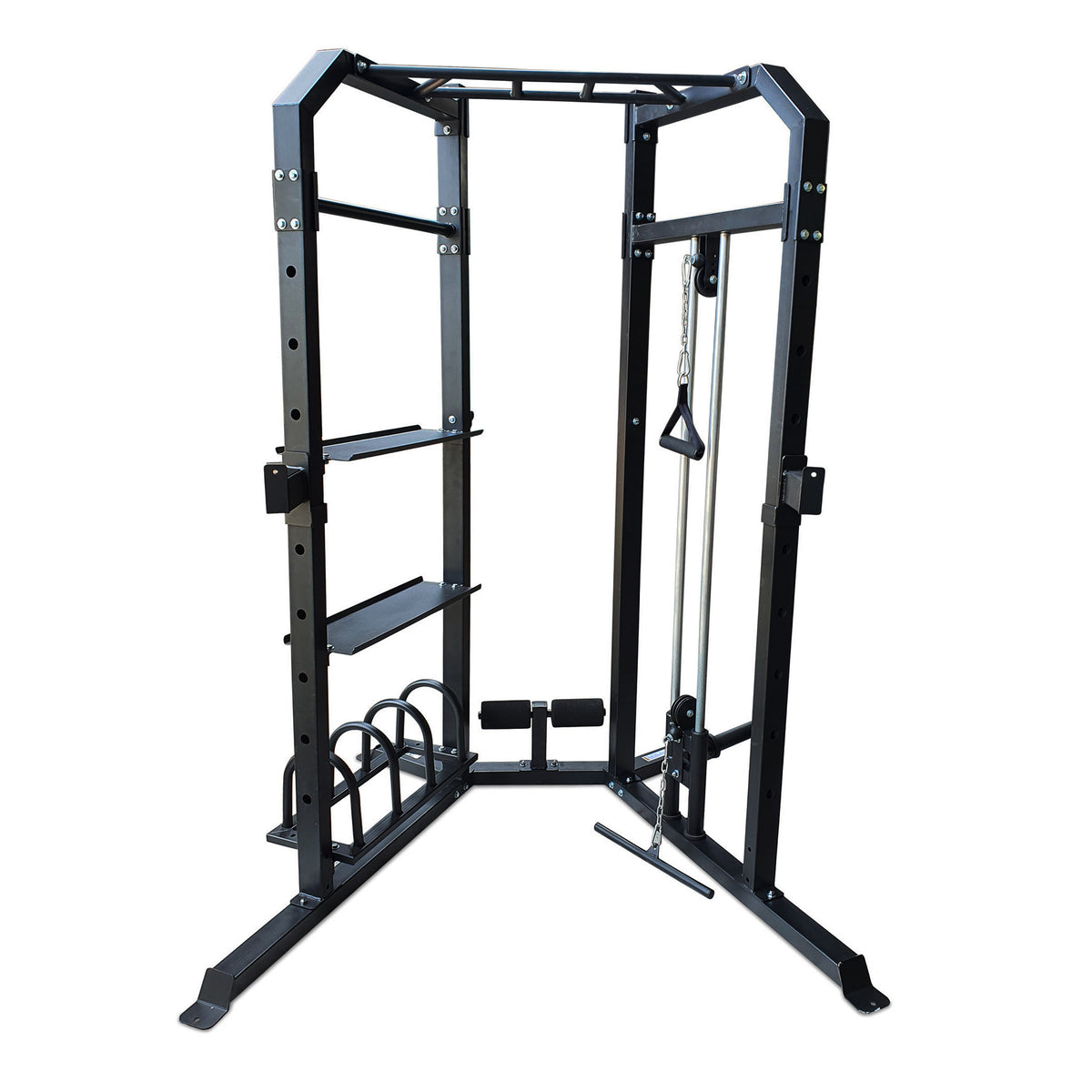
BodyIron® Power Cage System MC350
- BodyIron® Ab Straps, or
- Harbinger Ab Crunch
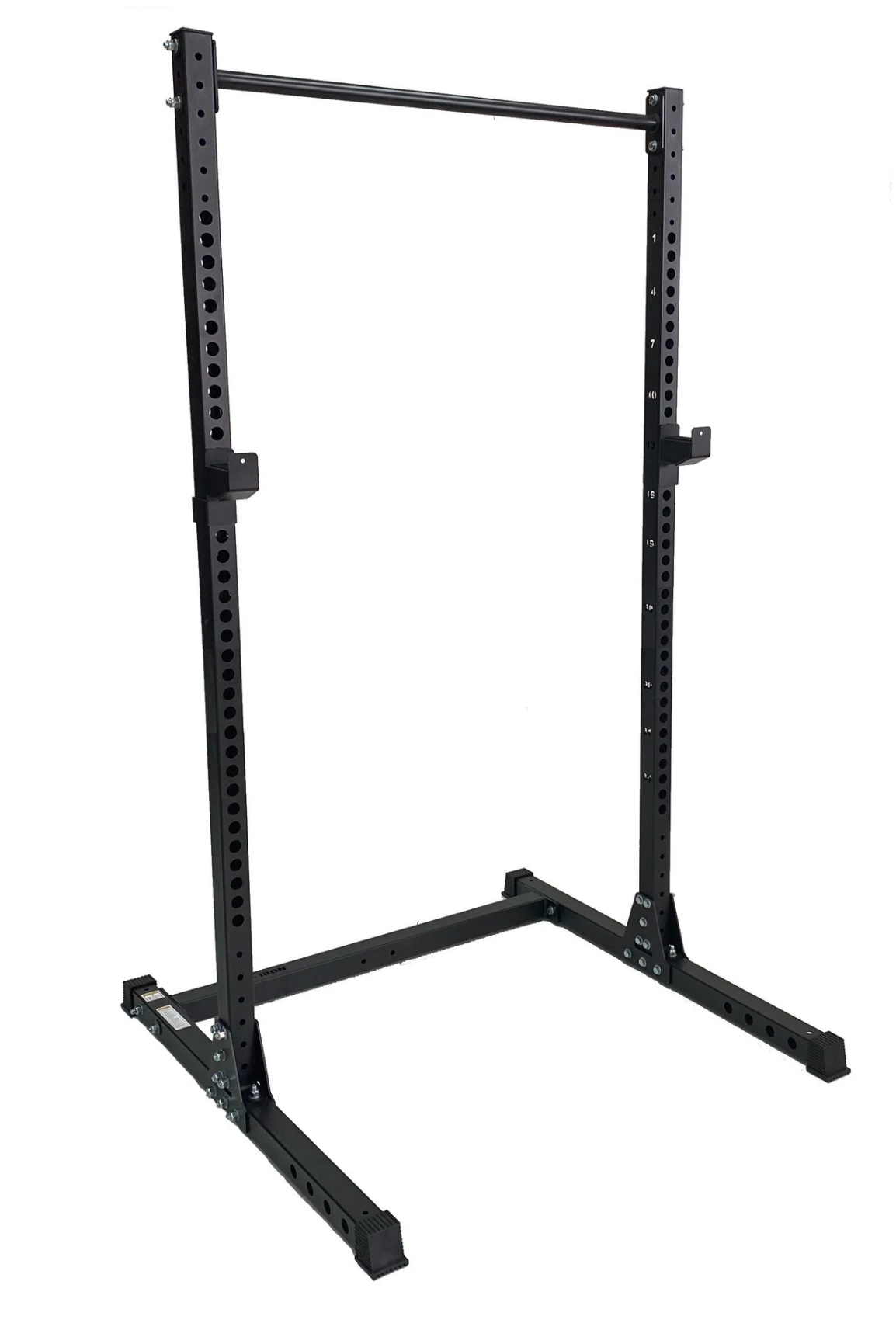
BodyIron® SQR 60 Heavy Duty Squat Rack
- BodyIron® Dip Attachment 60x60mm Pair
Common Mistakes When Choosing Between Them
- Assuming one is objectively better. Each is built around a different trade-off between guided safety, free movement, footprint and versatility, not a hierarchy of quality.
- Choosing based on price alone. All three categories span a wide price range, so price is not a reliable signal of which category actually suits your training.
- Buying a power rack for space savings. If floor space is the main constraint, a squat stand or half rack Smith machine almost always has a smaller footprint than a full power rack.
- Expecting a Smith machine to feel identical to a free bar. The fixed path is a genuine difference in feel and muscle recruitment, not just a safety feature layered on top of the same experience.
Where to Start
Four starting points, one from each category discussed in this guide:
Pro HD Half Rack Smith Machine
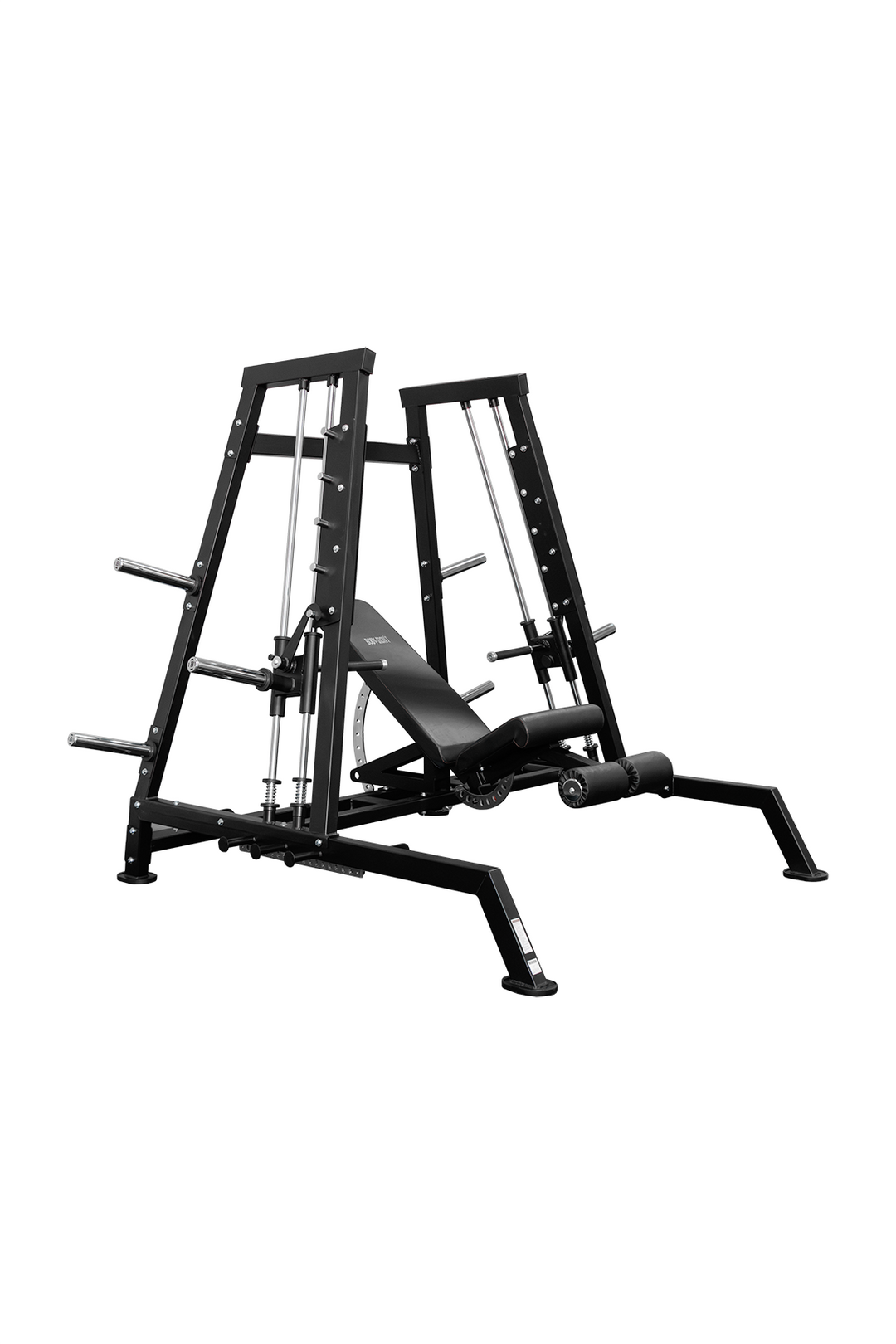
Bodyiron® Commercial Power Smith Machine Dual System Bench Press
BodyIron® Power Cage System MC350
BodyIron® SQR 60 Heavy Duty Squat Rack
Buy Smart, Train Hard
Compare Smith machines, power racks and squat stands side by side, and choose the setup that best fits your training space, budget and goals.
Frequently Asked Questions
Q. What is the difference between a Smith machine and a power rack?
A. A Smith machine guides the bar along a fixed track with built-in safety catches, while a power rack holds a free barbell with adjustable safety pins, giving full range of natural bar movement at the cost of needing more careful setup. Browse our Power Racks & Squat Racks range to compare options.
Q. What is the difference between a Smith machine and a squat stand?
A. A squat stand is a simpler two-post frame that supports a free barbell for squats and presses with no guided track, while a Smith machine's bar is fixed to rails, trading some natural movement for built-in safety. See our full range of Squat Racks and Stands.
Q. Is a Smith machine safer than a power rack for squats?
A. A Smith machine is generally considered safer for solo training since the bar cannot fall away from the fixed path, while a power rack still requires correctly set safety pins to catch a free bar on a failed rep.
Q. Can a Smith machine replace a power rack entirely?
A. For guided, solo strength training it can, but a power rack allows a fully free barbell path and typically supports a wider range of accessory attachments, so committed lifters often use both over time. Read our guide, What Is a Smith Machine?, for more on how a Smith machine works.
Q. What is an assisted squat machine?
A. An assisted squat machine, another term sometimes used for a Smith machine setup, refers to equipment that supports and guides the bar path during a squat, reducing the balance and stabilisation demands of a free barbell squat.
Q. Why do some Smith machines include a squat rack or pull-up bar?
A. Combining a Smith bar with a squat rack frame and pull-up bar in one unit gives access to guided pressing, free-standing rack work and bodyweight training from a single footprint, which suits buyers who want more than one training style covered.
Q. Which is better for a beginner, a Smith machine or a squat rack?
A. A Smith machine is generally easier for a beginner to start on since the guided path removes the balance challenge of a free barbell, while a squat rack better prepares a lifter for free weight training from the start.
Q. Can I add a Smith bar attachment to an existing power rack?
A. Some power rack systems support a Smith bar attachment, but this depends entirely on the specific rack's compatibility and should be checked against that model before assuming it is possible. Contact our showroom on (03) 9583 7820 to confirm compatibility with a specific model.
Buy Smart, Train Hard
Compare Smith machines, power racks and squat stands, and find the setup that fits your training and your space.
Shop Smith Machines Shop Power Racks & Squat Racks
Leave a comment