
Marvin's Top 3 Shoulder Exercises for Building Round, Powerful Delts
Today I’m in the World Fitness showroom, running through a shoulder session focused on one goal: building full, round, well-developed delts.
If you want shoulders that actually stand out, not just from the front, but from every angle, you need to be training all three head: Anterior (front), Lateral (side), Posterior (rear):

I’m going to take you through three of my go-to movements that target each one and help you build complete, balanced shoulders.
1. Shoulder Press (Anterior Delt Focus)
Why this movement?
Presses are your foundation for building the anterior delt, while still hitting the entire shoulder.
How I perform it
I like performing these on the Body Iron XP1, standing. The line of movement feels smooth and natural, and more importantly, it doesn’t beat up your shoulders. No clicking, no discomfort, just a clean press you can progressively load over time.
Key technique tip
Focus on the weaker, stretched position of the anterior delt. Most people are strongest through the mid to top range, but lack control at the bottom.
To fix this, start with partial reps in the lower half, bringing the weight up halfway and really locking into that deep stretch.
If you’re not feeling it enough, switch to partials in the top half of the movement instead. Rotate between both depending on the session.
How to finish
Finish with full-range standing presses, then occasionally increase the weight and hold the top position for 40–60 seconds. This helps build stability and fully fatigue the shoulders.

2. Cable Lateral Raise (Lateral Delt Focus)
Why this movement?
This one is all about building the side delts to create that wide, capped shoulder look.
How I perform it
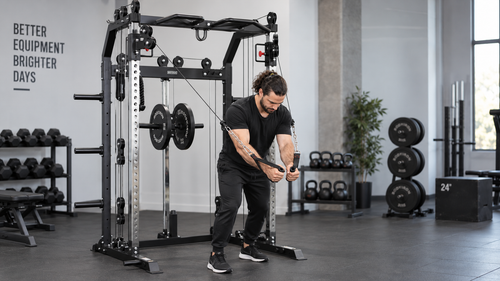
I use the Body Iron BFX250 with two tricep ropes attached. Set the weight light to start, step out to create tension, and make sure the top plate is slightly lifted before you begin.
From there, perform the same motion as a standard lateral raise, driving the elbows up and out but using the cables instead of dumbbells.
Why cables over dumbbells?
Most people go too heavy with dumbbells and end up swinging the weight, taking tension away from the side delts.
With cables, you get constant tension from the bottom all the way to the top of the movement. It forces better control and keeps the focus exactly where it should be on the lateral delt.
Key technique tip
Keep the weight lighter than you think. Focus on clean reps, controlled tempo, and leading with the elbows, not the hands.
Side delts respond really well to volume, so don’t be afraid to push your sets higher than usual.
Why it works
This variation creates a much stronger stimulus compared to dumbbells, especially if you struggle to feel your side delts working. It’s one of those movements that consistently leaves you sore in the right places.

3. Cable Rear Delt Fly (Posterior Delt Focus)
Why this movement?
This targets the posterior delt, which is key for building complete, balanced shoulders from every angle.
The problem with most machines
Most people train rear delts on a standard rear delt machine. The issue is the range.
At the front of the movement, your arms are directly in front of you, but you lose tension early. The machine limits how far you can bring the weight in, meaning you’re not fully loading the stretched position of the muscle.
How I perform it
Instead, I use the Body Iron BFX250 with a short bar attachment.
Step slightly across the cable so you can work through a longer range. Let the cable pull your arm forward into a full stretch, then drive it back and out, focusing on the rear delt.
Keep your posture locked in, and think about letting the shoulder move naturally through the full range, not just pulling with your arms.
Key technique tip
Focus on getting a full stretch at the front, then fully contracting at the back. You want the muscle to lengthen and shorten completely through every rep.
Also, concentrate on the side you’re working, don’t just go through the motion.
Why it works
This setup allows for a much greater range of motion compared to a rear delt machine, keeping constant tension on the muscle from start to finish.

Final Thoughts
That’s my three go-to delt exercises when I’m focused on building full, round shoulders.
The biggest takeaway? Train each head with intention. Don’t just go through the motions, focus on how each movement feels, control your reps, and make sure you’re actually targeting the muscle you’re trying to grow.
You might notice I don’t focus on traps in these exercises. I prefer to keep them separate and hit them on back day so I can give both areas the attention they deserve.
Give these three movements a run and see how it feels. If you’re consistent with it and actually focus on execution, you’ll start to notice a big difference in your shoulder development.
If you're ready to build your own shoulder setup, choose equipment that suits your training style and goals, so you can buy smart, train hard.
Leave a comment